" width="95px"><path d="M 0 0 L 95 0 L 95 19 L 0 19 Z" fill="transparent" height="19px" id="f141K9XUg" width="95px"/><path d="M 1.906 0 C 2.959 0 3.813 0.863 3.813 1.927 C 3.813 2.992 2.959 3.854 1.906 3.854 C 0.853 3.854 0 2.992 0 1.927 C 0 0.863 0.853 0 1.906 0 Z M 0.254 5.818 L 3.468 5.818 L 3.468 15.233 L 0.254 15.233 Z M 5.737 15.233 L 8.951 15.233 L 8.951 9.727 C 8.951 8.975 9.368 8.149 10.44 8.149 C 11.583 8.149 12.074 8.975 12.074 9.911 L 12.074 15.233 L 15.287 15.233 L 15.287 9.617 C 15.323 8.901 15.759 8.149 16.776 8.149 C 17.92 8.149 18.41 8.975 18.41 9.911 L 18.41 15.233 L 21.624 15.233 L 21.624 9.03 C 21.624 6.405 19.699 5.543 17.992 5.543 C 16.976 5.543 15.886 6.075 14.906 7.268 C 14.252 6.002 12.891 5.543 11.656 5.543 C 10.639 5.543 9.713 6.075 8.987 6.809 L 8.951 6.809 L 8.951 5.818 L 5.737 5.818 Z M 23.621 15.233 L 26.834 15.233 L 26.834 9.727 C 26.834 8.975 27.252 8.149 28.323 8.149 C 29.467 8.149 29.957 8.975 29.957 9.911 L 29.957 15.233 L 33.171 15.233 L 33.171 9.617 C 33.207 8.901 33.643 8.149 34.659 8.149 C 35.803 8.149 36.293 8.975 36.293 9.911 L 36.293 15.233 L 39.507 15.233 L 39.507 9.03 C 39.507 6.405 37.582 5.543 35.876 5.543 C 34.859 5.543 33.77 6.075 32.789 7.268 C 32.136 6.002 30.774 5.543 29.539 5.543 C 28.523 5.543 27.597 6.075 26.871 6.809 L 26.834 6.809 L 26.834 5.818 L 23.621 5.818 Z M 50.927 10.975 C 50.945 10.865 50.945 10.663 50.945 10.535 C 50.945 7.231 48.785 5.543 45.952 5.543 C 43.138 5.543 40.832 7.782 40.832 10.535 C 40.832 13.269 43.138 15.509 45.952 15.509 C 48.022 15.509 49.729 14.829 50.782 13.049 L 48.458 11.875 C 47.677 12.719 47.223 12.921 46.188 12.921 C 45.371 12.921 44.173 12.425 44.173 10.975 Z M 44.264 9.177 C 44.318 8.314 44.936 7.653 46.043 7.653 C 46.987 7.653 47.659 8.186 47.804 9.177 Z M 52.416 15.233 L 55.629 15.233 L 55.629 10.278 C 55.629 10.039 55.865 8.369 57.536 8.369 C 58.607 8.369 59.206 8.883 59.206 8.883 L 60.55 6.13 C 60.55 6.13 59.714 5.543 58.516 5.543 C 56.682 5.543 55.666 7.176 55.666 7.176 L 55.629 7.176 L 55.629 5.818 L 52.416 5.818 Z M 65.361 5.543 C 62.91 5.543 61.294 6.644 61.294 8.571 C 61.294 9.984 62.238 10.645 63.182 11.14 C 64.235 11.691 65.252 11.746 65.252 12.425 C 65.252 13.049 64.707 13.104 64.253 13.104 C 63.219 13.104 61.948 12.021 61.948 12.021 L 60.64 14.242 C 60.64 14.242 61.984 15.509 64.235 15.509 C 66.142 15.509 68.647 15.068 68.647 12.297 C 68.647 10.37 67.049 9.672 65.815 9.287 C 65.016 9.03 64.362 8.883 64.362 8.387 C 64.362 7.947 64.653 7.818 65.361 7.818 C 66.341 7.818 67.431 8.406 67.431 8.406 L 68.484 6.277 C 68.484 6.277 67.158 5.543 65.361 5.543 Z M 71.897 0 C 72.95 0 73.803 0.863 73.803 1.927 C 73.803 2.992 72.95 3.854 71.897 3.854 C 70.844 3.854 69.991 2.992 69.991 1.927 C 69.991 0.863 70.844 0 71.897 0 Z M 70.245 5.818 L 75.404 5.811 C 75.404 5.811 71.946 6.741 71.921 10.426 C 71.895 14.377 75.847 15.199 75.847 15.199 L 70.245 15.233 Z M 79.103 15.205 L 84.633 15.208 L 84.633 9.886 C 84.633 8.95 85.577 8.05 86.54 8.05 C 87.575 8.05 88.21 8.95 88.21 9.886 L 88.21 15.208 L 91.424 15.208 L 91.424 9.005 C 91.424 6.38 89.045 5.517 87.338 5.517 C 86.322 5.517 85.396 6.05 84.67 6.784 L 84.633 6.784 L 84.633 5.793 L 79.449 5.814 C 79.449 5.814 83.03 6.545 83.134 10.416 C 83.233 14.115 79.103 15.205 79.103 15.205 Z" fill="rgb(243, 241, 249)" height="15.508518576655096px" id="BrOY0jDQO" transform="translate(1.611 1.675)" width="91.42354276158623px"/><path d="M 1.906 0 C 2.959 0 3.813 0.863 3.813 1.927 C 3.813 2.992 2.959 3.854 1.906 3.854 C 0.853 3.854 0 2.992 0 1.927 C 0 0.863 0.853 0 1.906 0 Z" fill="rgb(70, 112, 205)" height="3.854188048636182px" id="yIBDdP8YK" transform="translate(77.207 10.186)" width="3.8127090301003363px"/></g></svg>)

AI Is Changing Work Faster Than Companies Can Adapt
Immersion founder Paul Zak sits down with AI innovator Torin Monet to explore how AI agents are reshaping productivity, organizational structures, and the way we work. From AI-powered chiefs of staff to the importance of psychological safety, their conversation reveals why human judgment, trust, and meaningful relationships may become even more valuable as machines take on increasingly complex work.
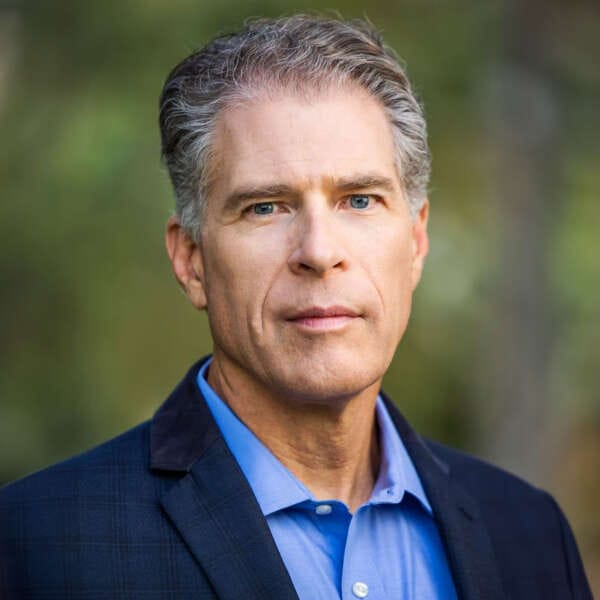
Paul Zak, PhD
Founder
Share
I love talking with people who make my brain work harder. My conversation with Torin Monet was one of those experiences. We bounced between artificial intelligence, the future of work, cognitive enhancement, psychological safety, and even love. We challenged each other, found plenty to agree about, and had a terrific time imagining a future that is arriving much faster than most people realize.
Torin is not simply experimenting with AI. He lives and breathes it. He works continuously with AI agents that help him think, solve problems, manage information, and collaborate with colleagues. I quickly discovered that we share a fascination with what happens when machines become genuine intellectual partners.
We kept returning to a provocative question: If one person with AI can accomplish what once required an entire team, what happens to companies and entire societies?
The Great Productivity Divide
Torin sees an enormous divide emerging between people and organizations that embrace AI and those that don't.
Imagine one department using AI agents to complete projects in hours that previously required weeks. Meanwhile, the department down the hall is still scheduling meetings, exchanging emails, and moving documents through approval processes.
How long can those two worlds coexist?
Torin thinks the answer is not very long.
He describes organizations becoming increasingly fragmented as technological capabilities advance faster than employee skills and organizational structures. Some workers become extraordinarily productive while others continue working much as they always have.
And then there is the uncomfortable economic question. If companies can accomplish more with fewer people, what happens to all those employees?
Investors are already paying attention to productivity and profitability per employee. Torin expects this pressure to intensify.
We agreed that leaders who don't personally experiment with AI are putting themselves at a serious disadvantage. How can you redesign an organization around a technology you barely understand?
AI literacy is no longer optional for leaders.
My AI Has a Chief of Staff. Does Yours?
One of the most entertaining parts of our conversation was comparing how we use AI.
Torin treats his AI agents much like an executive treats a chief of staff. Rather than issuing a simple question and waiting for an answer, he delegates complicated work and lets the agents figure out how to accomplish it.
His agents review hundreds of project files, access applications, communicate with colleagues, and solve problems with relatively little supervision.
He even described watching his AI agent collaborate with someone else's agent to troubleshoot a technical problem.
Think about that. Two machines working together to solve a problem while their human supervisors oversee the process.
This is where things get really interesting to me as a neuroscientist.
Our brains have limited processing capacity. We can attend to only so much information at once. But what happens when we can effectively extend our cognitive abilities through AI?
Torin sees AI as a way to dramatically expand what an individual can accomplish. Instead of managing ten people, someone manages ten AI workflows, each independently handling complex tasks.
I agree this is the future for many of us. But it also means that our ability to evaluate the quality of AI-generated work becomes increasingly important.
The scarce resource will no longer be information or even intelligence. It will be judgment.
Tell Me When I'm Wrong
Here is something Torin and I have in common that made us both smile: We deliberately train our AI agents to disagree with us.
Most AI assistants are eager to please. Ask a question and they often respond with some version of "Great idea!"
But what if your idea is terrible?
I don't want an AI that congratulates me for being brilliant. I want one that tells me when my reasoning is weak, my assumptions are questionable, or my evidence is insufficient.
Torin feels exactly the same way.
He instructs his models to identify logical errors, challenge assumptions, and demand evidence. I do something similar with my AI research collaborator.
We want intellectual sparring partners, not digital cheerleaders.
And this led us to another possibility: Could AI actually make people better thinkers?
Torin described watching his father increasingly benefit from AI as the technology becomes easier to use. Imagine an older adult with an AI assistant that remembers important information, helps solve everyday problems, and provides cognitive support whenever needed.
Rather than replacing human intelligence, AI could help us exercise it more effectively.
What Does Love Have to Do With AI?
Our conversation took an unexpected turn when Torin described the culture of his team.
His colleagues challenge one another constantly. They question ideas, point out mistakes, and sometimes disagree forcefully.
Yet Torin describes the team as having exceptionally high psychological safety.
I suggested that the missing ingredient was love.
Not romantic love, of course, but the genuine affection and concern we develop for people we respect and care about.
When you really care about someone, you want them to succeed. And sometimes helping them succeed means telling them that their idea is terrible.
Torin enthusiastically agreed. His team members trust one another enough to disagree without interpreting criticism as a personal attack.
This is a crucial distinction.
Psychological safety does not mean everyone is nice all the time. It means people feel secure enough to take intellectual risks, make mistakes, and challenge one another.
The best teams don't eliminate conflict. They make conflict productive.
And I couldn't help noticing the parallel with our AI agents. We want machines that challenge us precisely because we value intellectual honesty.
The same principle applies to both human and artificial collaborators: The best relationships make us better, not merely more comfortable.
Smaller Companies, Bigger Possibilities
Torin anticipates a future in which small teams accomplish work that previously required large organizations.
AI agents will manage increasingly complex workflows, communicate with other agents, and handle routine decisions. Humans will provide direction, evaluate results, and solve unusual problems.
Companies built around AI from the beginning may have advantages over established organizations struggling to transform themselves.
AI can also give us something we desperately need: more time.
Time for friends. Time for family. Time for creativity, adventures, and helping others.
We spend an extraordinary amount of our lives doing things that are necessary but not especially meaningful. If AI handles more of those tasks, perhaps we can invest more of our lives in experiences that genuinely make us happy.
Torin shares that hope, although he thinks the transition could be difficult for some people.
Torin and I agreed that AI will fundamentally change how we work, but we also spent a surprising amount of time discussing trust, disagreement, friendship, and love.
As machines become better at performing intellectual tasks, our relationships with other people become an increasingly important part of what makes work, and life, worthwhile.
FAQs
1. How are AI agents changing the future of work?
AI agents can manage complex workflows, process information, coordinate across applications, and complete tasks that previously required significant human effort. This could allow smaller teams to accomplish more while changing how organizations structure their work.
2. Why is human judgment important in an AI-powered workplace?
As AI takes on more analytical and operational tasks, people must be able to evaluate outputs, identify errors, challenge assumptions, and make informed decisions. Human judgment becomes especially important when AI produces plausible but incorrect results.
3. What role does psychological safety play in high-performing teams?
Psychological safety allows team members to challenge ideas, acknowledge mistakes, and disagree without fearing personal consequences. Teams that combine trust with constructive disagreement are better positioned to learn, innovate, and solve complex problems.
4. Can AI improve human thinking rather than replace it?
Potentially. AI can serve as an intellectual sparring partner, helping people explore ideas, question assumptions, and manage complex information. The greatest benefit may come from using AI to strengthen human thinking rather than simply automate it.


