" width="95px"><path d="M 0 0 L 95 0 L 95 19 L 0 19 Z" fill="transparent" height="19px" id="f141K9XUg" width="95px"/><path d="M 1.906 0 C 2.959 0 3.813 0.863 3.813 1.927 C 3.813 2.992 2.959 3.854 1.906 3.854 C 0.853 3.854 0 2.992 0 1.927 C 0 0.863 0.853 0 1.906 0 Z M 0.254 5.818 L 3.468 5.818 L 3.468 15.233 L 0.254 15.233 Z M 5.737 15.233 L 8.951 15.233 L 8.951 9.727 C 8.951 8.975 9.368 8.149 10.44 8.149 C 11.583 8.149 12.074 8.975 12.074 9.911 L 12.074 15.233 L 15.287 15.233 L 15.287 9.617 C 15.323 8.901 15.759 8.149 16.776 8.149 C 17.92 8.149 18.41 8.975 18.41 9.911 L 18.41 15.233 L 21.624 15.233 L 21.624 9.03 C 21.624 6.405 19.699 5.543 17.992 5.543 C 16.976 5.543 15.886 6.075 14.906 7.268 C 14.252 6.002 12.891 5.543 11.656 5.543 C 10.639 5.543 9.713 6.075 8.987 6.809 L 8.951 6.809 L 8.951 5.818 L 5.737 5.818 Z M 23.621 15.233 L 26.834 15.233 L 26.834 9.727 C 26.834 8.975 27.252 8.149 28.323 8.149 C 29.467 8.149 29.957 8.975 29.957 9.911 L 29.957 15.233 L 33.171 15.233 L 33.171 9.617 C 33.207 8.901 33.643 8.149 34.659 8.149 C 35.803 8.149 36.293 8.975 36.293 9.911 L 36.293 15.233 L 39.507 15.233 L 39.507 9.03 C 39.507 6.405 37.582 5.543 35.876 5.543 C 34.859 5.543 33.77 6.075 32.789 7.268 C 32.136 6.002 30.774 5.543 29.539 5.543 C 28.523 5.543 27.597 6.075 26.871 6.809 L 26.834 6.809 L 26.834 5.818 L 23.621 5.818 Z M 50.927 10.975 C 50.945 10.865 50.945 10.663 50.945 10.535 C 50.945 7.231 48.785 5.543 45.952 5.543 C 43.138 5.543 40.832 7.782 40.832 10.535 C 40.832 13.269 43.138 15.509 45.952 15.509 C 48.022 15.509 49.729 14.829 50.782 13.049 L 48.458 11.875 C 47.677 12.719 47.223 12.921 46.188 12.921 C 45.371 12.921 44.173 12.425 44.173 10.975 Z M 44.264 9.177 C 44.318 8.314 44.936 7.653 46.043 7.653 C 46.987 7.653 47.659 8.186 47.804 9.177 Z M 52.416 15.233 L 55.629 15.233 L 55.629 10.278 C 55.629 10.039 55.865 8.369 57.536 8.369 C 58.607 8.369 59.206 8.883 59.206 8.883 L 60.55 6.13 C 60.55 6.13 59.714 5.543 58.516 5.543 C 56.682 5.543 55.666 7.176 55.666 7.176 L 55.629 7.176 L 55.629 5.818 L 52.416 5.818 Z M 65.361 5.543 C 62.91 5.543 61.294 6.644 61.294 8.571 C 61.294 9.984 62.238 10.645 63.182 11.14 C 64.235 11.691 65.252 11.746 65.252 12.425 C 65.252 13.049 64.707 13.104 64.253 13.104 C 63.219 13.104 61.948 12.021 61.948 12.021 L 60.64 14.242 C 60.64 14.242 61.984 15.509 64.235 15.509 C 66.142 15.509 68.647 15.068 68.647 12.297 C 68.647 10.37 67.049 9.672 65.815 9.287 C 65.016 9.03 64.362 8.883 64.362 8.387 C 64.362 7.947 64.653 7.818 65.361 7.818 C 66.341 7.818 67.431 8.406 67.431 8.406 L 68.484 6.277 C 68.484 6.277 67.158 5.543 65.361 5.543 Z M 71.897 0 C 72.95 0 73.803 0.863 73.803 1.927 C 73.803 2.992 72.95 3.854 71.897 3.854 C 70.844 3.854 69.991 2.992 69.991 1.927 C 69.991 0.863 70.844 0 71.897 0 Z M 70.245 5.818 L 75.404 5.811 C 75.404 5.811 71.946 6.741 71.921 10.426 C 71.895 14.377 75.847 15.199 75.847 15.199 L 70.245 15.233 Z M 79.103 15.205 L 84.633 15.208 L 84.633 9.886 C 84.633 8.95 85.577 8.05 86.54 8.05 C 87.575 8.05 88.21 8.95 88.21 9.886 L 88.21 15.208 L 91.424 15.208 L 91.424 9.005 C 91.424 6.38 89.045 5.517 87.338 5.517 C 86.322 5.517 85.396 6.05 84.67 6.784 L 84.633 6.784 L 84.633 5.793 L 79.449 5.814 C 79.449 5.814 83.03 6.545 83.134 10.416 C 83.233 14.115 79.103 15.205 79.103 15.205 Z" fill="rgb(243, 241, 249)" height="15.508518576655096px" id="BrOY0jDQO" transform="translate(1.611 1.675)" width="91.42354276158623px"/><path d="M 1.906 0 C 2.959 0 3.813 0.863 3.813 1.927 C 3.813 2.992 2.959 3.854 1.906 3.854 C 0.853 3.854 0 2.992 0 1.927 C 0 0.863 0.853 0 1.906 0 Z" fill="rgb(70, 112, 205)" height="3.854188048636182px" id="yIBDdP8YK" transform="translate(77.207 10.186)" width="3.8127090301003363px"/></g></svg>)

FIFA's Fan Festival Proves Live Experiences Matter
Philadelphia’s FIFA Fan Festival shows why audiences increasingly expect live events to deliver more than entertainment. Paul Zak explains how story arcs, carefully placed emotional peaks, and real-time measurement can help event designers create memorable experiences that drive loyalty, advocacy, and business value.

Paul Zak, PhD
Founder
Share
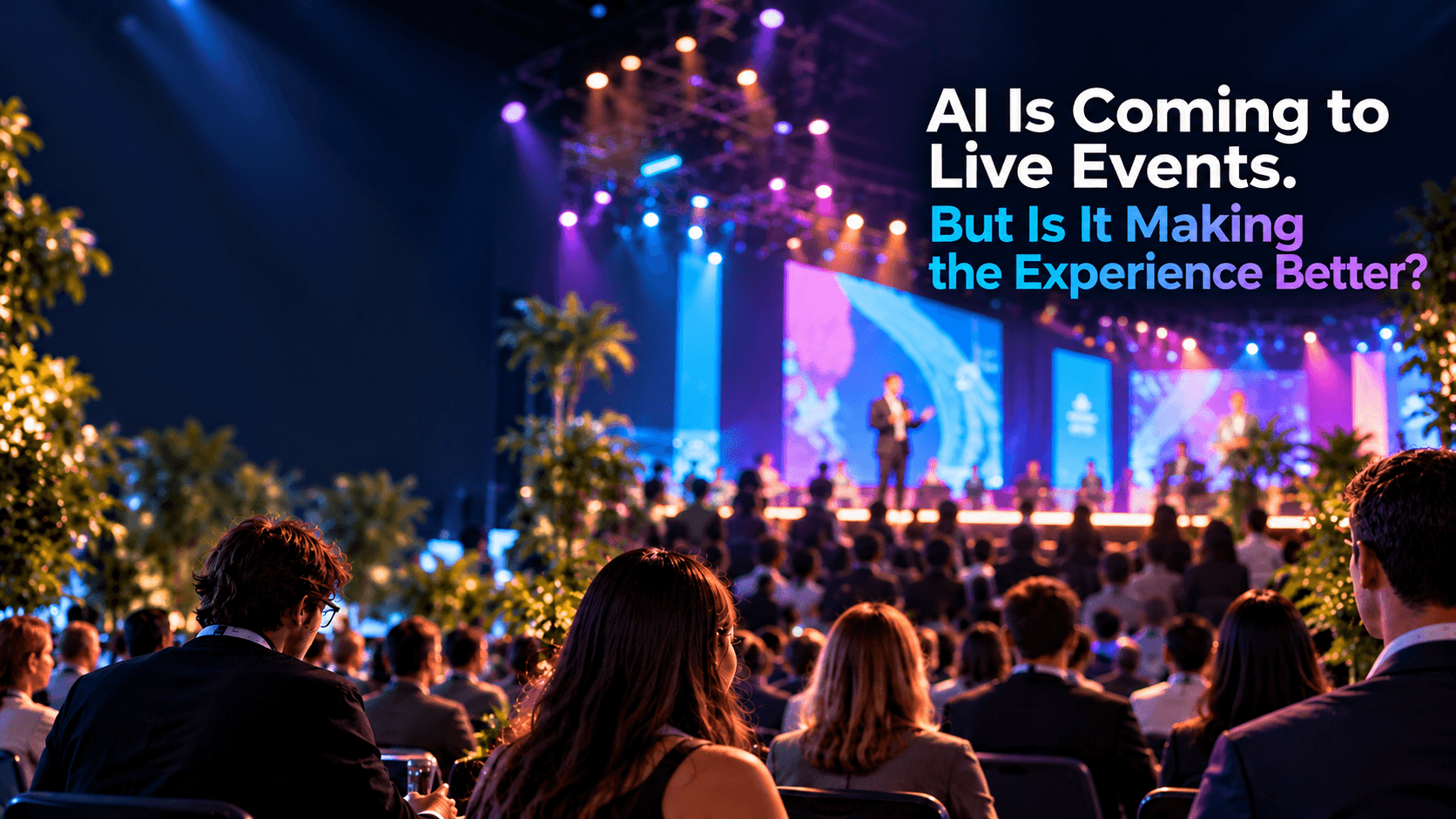
More than 425,000 people attended Philadelphia’s FIFA Fan Festival™ in 2026. While the matches drew the crowds, the event itself became the attraction. Visitors enjoyed live music, local food, cultural programming, giant viewing screens, family activities, and countless moments designed to create memories.
That reflects a broader shift happening across every industry. Whether you're organizing a customer conference, a museum exhibit, a product launch, or an employee meeting, your audience expects more than the ordinary. They expect the extraordinary.
Creating an experience is easy. Creating an extraordinary experience can be extraordinarily difficult.
Most event design companies measure attendance or Net Promoter Scores. These poorly predict what an event is supposed to do: create raving fans who spend money and tell the world about their experience.
Extraordinary experiences are built from thoughtfully engineered moments that are measured and incrementally improved.
Create a Story Arc
One mistake many event designers make is trying to keep the energy high every minute. That approach overwhelms the brain, leading to exhaustion. The most memorable experiences are built around a handful of peak moments surrounded by opportunities to reflect, connect, and anticipate what's coming next.
Long-form storytelling does exactly that: tension rises and falls so that audiences sustain the energy to enjoy every part of the experience. Tension troughs are necessary to allow neurons to rest and recover the energy needed for the next high tension element.
One difference between traditional storytelling and event design is that events do not need to resolve all the parts of the narrative. In fact, the data show that the most effective events end on a high-note, something so amazing that people want to return and do it all again. This is known as the peak-end rule: people remember the emotional peaks of an experience and what happened at the end. There is a powerful desire to repeat the experience when an emotional peak occurs at the end.
Those are events designed with intention.
Instead of asking, "How do we keep people entertained all day?" ask, "What are the two or three moments people will still be talking about next week?"
Know Your Audience
When event designers create the right experience for the right audience, magic happens. But, even using a story arc, there is not one ultimate design that will be valued by every audience. A core finding from psychology (due to Nobel prize winner Danny Kahneman, RIP), is that people have poorly defined preferences over things they have not personally experienced. This is the Steve Jobs problem: asking an audience what they want is a fool's errand.
Best practice is to create a mock-up and measure. Mock-ups include drawings, animatics, VR films, and small-scale builds. Then, test your design by recruiting humans and measuring their neurologic Immersion while they go through the experience. Rather than ask people what they "like", measure what their brains value second by second to turn an idea into something extraordinary.
Measurement is Your Competitive Advantage
Clients demand extraordinary because IRL experiences are increasingly central to doing business. Design, then measure Immersion. Repeat until the audience responds exactly where you want it to—during the product reveal, the call to action, or the final goodbye. Put the "OMG" emotional response exactly where you want it to be by measuring before execution. IRL experiences will not get "AI'd away" anytime soon. But, an ordinary experience does not move the needle. Only the extraordinary does.
This is where ImmersionLive comes in. ImmersionLive is a kit you own that has everything you need to optimize your experience. ImmersionLive's ROX calculator will convince the skeptical CFO paying for the experience that your expertise and execution were well worth the investment. You cannot optimize without measuring, and with a simple pay-as-you-go model, ImmersionLive makes it is easier than ever to ensure every experience you design is the best ever. While you may never reach the fever-pitch of the FIFA FanFest, you can get close when you intentionally design for peak Immersion moments that your audience will love.
To get a demo of ImmersionLive from a live human, use the link here.
FAQs
What makes a live experience memorable?
Memorable experiences are built around a few emotionally powerful moments, balanced with opportunities to reflect, connect, and anticipate what comes next.
Why should event designers use a story arc?
A story arc creates natural rises and falls in energy, helping audiences stay engaged without becoming overwhelmed and making peak moments more impactful.
How can event teams improve the audience experience?
Teams can prototype key moments and measure neurologic Immersion to understand what audiences value, optimize the experience, and demonstrate its business impact.