" width="95px"><path d="M 0 0 L 95 0 L 95 19 L 0 19 Z" fill="transparent" height="19px" id="f141K9XUg" width="95px"/><path d="M 1.906 0 C 2.959 0 3.813 0.863 3.813 1.927 C 3.813 2.992 2.959 3.854 1.906 3.854 C 0.853 3.854 0 2.992 0 1.927 C 0 0.863 0.853 0 1.906 0 Z M 0.254 5.818 L 3.468 5.818 L 3.468 15.233 L 0.254 15.233 Z M 5.737 15.233 L 8.951 15.233 L 8.951 9.727 C 8.951 8.975 9.368 8.149 10.44 8.149 C 11.583 8.149 12.074 8.975 12.074 9.911 L 12.074 15.233 L 15.287 15.233 L 15.287 9.617 C 15.323 8.901 15.759 8.149 16.776 8.149 C 17.92 8.149 18.41 8.975 18.41 9.911 L 18.41 15.233 L 21.624 15.233 L 21.624 9.03 C 21.624 6.405 19.699 5.543 17.992 5.543 C 16.976 5.543 15.886 6.075 14.906 7.268 C 14.252 6.002 12.891 5.543 11.656 5.543 C 10.639 5.543 9.713 6.075 8.987 6.809 L 8.951 6.809 L 8.951 5.818 L 5.737 5.818 Z M 23.621 15.233 L 26.834 15.233 L 26.834 9.727 C 26.834 8.975 27.252 8.149 28.323 8.149 C 29.467 8.149 29.957 8.975 29.957 9.911 L 29.957 15.233 L 33.171 15.233 L 33.171 9.617 C 33.207 8.901 33.643 8.149 34.659 8.149 C 35.803 8.149 36.293 8.975 36.293 9.911 L 36.293 15.233 L 39.507 15.233 L 39.507 9.03 C 39.507 6.405 37.582 5.543 35.876 5.543 C 34.859 5.543 33.77 6.075 32.789 7.268 C 32.136 6.002 30.774 5.543 29.539 5.543 C 28.523 5.543 27.597 6.075 26.871 6.809 L 26.834 6.809 L 26.834 5.818 L 23.621 5.818 Z M 50.927 10.975 C 50.945 10.865 50.945 10.663 50.945 10.535 C 50.945 7.231 48.785 5.543 45.952 5.543 C 43.138 5.543 40.832 7.782 40.832 10.535 C 40.832 13.269 43.138 15.509 45.952 15.509 C 48.022 15.509 49.729 14.829 50.782 13.049 L 48.458 11.875 C 47.677 12.719 47.223 12.921 46.188 12.921 C 45.371 12.921 44.173 12.425 44.173 10.975 Z M 44.264 9.177 C 44.318 8.314 44.936 7.653 46.043 7.653 C 46.987 7.653 47.659 8.186 47.804 9.177 Z M 52.416 15.233 L 55.629 15.233 L 55.629 10.278 C 55.629 10.039 55.865 8.369 57.536 8.369 C 58.607 8.369 59.206 8.883 59.206 8.883 L 60.55 6.13 C 60.55 6.13 59.714 5.543 58.516 5.543 C 56.682 5.543 55.666 7.176 55.666 7.176 L 55.629 7.176 L 55.629 5.818 L 52.416 5.818 Z M 65.361 5.543 C 62.91 5.543 61.294 6.644 61.294 8.571 C 61.294 9.984 62.238 10.645 63.182 11.14 C 64.235 11.691 65.252 11.746 65.252 12.425 C 65.252 13.049 64.707 13.104 64.253 13.104 C 63.219 13.104 61.948 12.021 61.948 12.021 L 60.64 14.242 C 60.64 14.242 61.984 15.509 64.235 15.509 C 66.142 15.509 68.647 15.068 68.647 12.297 C 68.647 10.37 67.049 9.672 65.815 9.287 C 65.016 9.03 64.362 8.883 64.362 8.387 C 64.362 7.947 64.653 7.818 65.361 7.818 C 66.341 7.818 67.431 8.406 67.431 8.406 L 68.484 6.277 C 68.484 6.277 67.158 5.543 65.361 5.543 Z M 71.897 0 C 72.95 0 73.803 0.863 73.803 1.927 C 73.803 2.992 72.95 3.854 71.897 3.854 C 70.844 3.854 69.991 2.992 69.991 1.927 C 69.991 0.863 70.844 0 71.897 0 Z M 70.245 5.818 L 75.404 5.811 C 75.404 5.811 71.946 6.741 71.921 10.426 C 71.895 14.377 75.847 15.199 75.847 15.199 L 70.245 15.233 Z M 79.103 15.205 L 84.633 15.208 L 84.633 9.886 C 84.633 8.95 85.577 8.05 86.54 8.05 C 87.575 8.05 88.21 8.95 88.21 9.886 L 88.21 15.208 L 91.424 15.208 L 91.424 9.005 C 91.424 6.38 89.045 5.517 87.338 5.517 C 86.322 5.517 85.396 6.05 84.67 6.784 L 84.633 6.784 L 84.633 5.793 L 79.449 5.814 C 79.449 5.814 83.03 6.545 83.134 10.416 C 83.233 14.115 79.103 15.205 79.103 15.205 Z" fill="rgb(243, 241, 249)" height="15.508518576655096px" id="BrOY0jDQO" transform="translate(1.611 1.675)" width="91.42354276158623px"/><path d="M 1.906 0 C 2.959 0 3.813 0.863 3.813 1.927 C 3.813 2.992 2.959 3.854 1.906 3.854 C 0.853 3.854 0 2.992 0 1.927 C 0 0.863 0.853 0 1.906 0 Z" fill="rgb(70, 112, 205)" height="3.854188048636182px" id="yIBDdP8YK" transform="translate(77.207 10.186)" width="3.8127090301003363px"/></g></svg>)

Why Human Connection Is the Real Product of Live Events
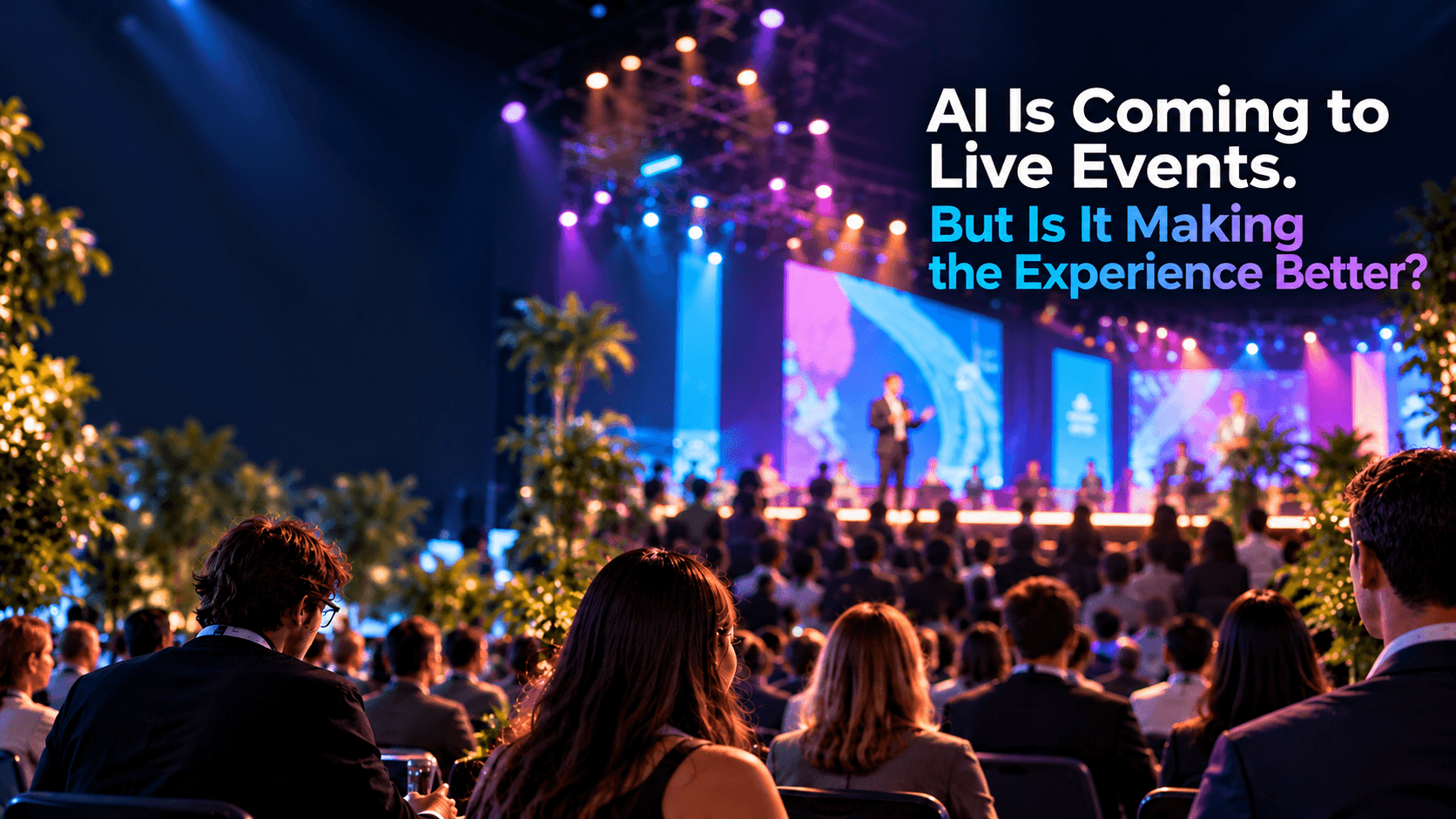
People may buy tickets for the entertainment or content, but the most valuable live experiences create meaningful human connection. By measuring audiences’ real-time neurophysiologic responses, event designers can identify the moments that build community, strengthen memories, and inspire people to return.

Paul Zak, PhD
Founder
Share
The Real Product of Live Events Isn't Entertainment. It's Human Connection.
If you ask people why they attend a concert, conference, sporting event, or festival, they'll usually tell you it's for the music, the speakers, the game, or the entertainment.
They're wrong.
Those are the reasons they buy the ticket. They're not the reason people come back. The real product of a great live experience is human connection.
The moments people remember years later never describe the lighting, the stage design, or even the content. They remember who they were with. The stranger they high-fived after a last-second goal. The standing ovation that seemed to last forever. The conversation that started over coffee and became a lifelong friendship. The experience of thousands of people experiencing exactly the same emotion.
Neuroanatomically, we are designed to connect with others. Shared experiences are how strangers become teammates, customers become advocates, and audiences become communities.
That's why live experiences remain so valuable in an increasingly digital world.
Artificial intelligence can summarize a keynote. Streaming services can bring concerts into our living rooms. Virtual reality can recreate almost any environment. But, none of these technologies can reproduce a shared emotional moment with other human beings.
Connection is the product.
The best event designers understand this. They aren't simply filling an agenda with speakers or activities. They're creating opportunities for people to laugh together, celebrate together, solve problems together, and leave feeling closer than when they arrived.
Unfortunately, many events are still measured as if information was the product. Attendance. Registration. Post-event surveys.
Those metrics tell you how many people showed up. They tell you almost nothing about whether people connected with one another.
That distinction matters because connected audiences behave differently. They stay longer. They return. They bring friends. They share what they experienced. They become advocates for the event, the brand, and the community that formed around it.
Creating those outcomes requires more than great logistics. It requires intentional design that has as its goal, building community.
Communities are built in moments. Think about live experiences as a series of opportunities to create shared emotional peaks. A compelling opening. A surprising reveal. A story that resonates. A celebration everyone participates in. These moments measurably synchronize brain activity, turning a room full of individuals into a community.
The glaring mistake event creators often make is assuming they know where those moments will occur. In order to avoid this, the most innovative design teams prototype, test, and refine their event designs before opening day. They don't rely on intuition. They measure how audiences' brains respond, identify the moments that create the strongest emotional connection, and improve from there.
Extraordinary experiences are not accidents. They are designed, tested, measured, and improved. These innovators use ImmersionLive to measure every stage of every event they produce, from ideation to client presentation to mock-ups to the event itself. Their advantages comes from getting the right information to engineer extraordinary.
That right information is neurologic Immersion—the social-emotional value of experiences. Note the key phrase here: value is assessed using neurophysiologic responses to experiences that are enhanced with social connection.
ImmersionLive is a portable kit users own that has comfortable arm-worn wearables that you wave over and iPad and give to attendees. As soon as the wearables are retrieved, users get unambiguous analytics on what worked, what bombed, and for whom. Immediately. ImmersionLive's AI assistant even uses the data to identify the three most important improvements that will drive up Immersion; that is, make it more valuable for attendees. That's the AI-assist every event designer needs (and what clients really want to know).
The organizations that create the best live experiences don't simply produce better entertainment. They are experts at creating human connection—and proving they did.
Because in the end, people may buy a ticket for the content.
They come back for each other.
ImmersionLive is your ticket to create extraordinary events. Book your demo today.
FAQs
Why is human connection so important at live events?
Shared emotional experiences help turn individual attendees into a community. These moments strengthen memories, deepen engagement, and increase the likelihood that people will return, recommend the event, or advocate for the brand.
How can event organizers measure human connection?
Attendance numbers and post-event surveys cannot show how people responded moment by moment. ImmersionLive uses comfortable arm-worn wearables to measure attendees’ real-time neurophysiologic responses and identify the experiences that created the greatest social-emotional value.
How can event designers create more meaningful experiences?
Event designers can prototype and test key moments before the event, measure audience responses during the experience, and use those insights to refine what happens next. This replaces assumptions with evidence about what connected with attendees, what fell flat, and what should be improved.