" width="95px"><path d="M 0 0 L 95 0 L 95 19 L 0 19 Z" fill="transparent" height="19px" id="f141K9XUg" width="95px"/><path d="M 1.906 0 C 2.959 0 3.813 0.863 3.813 1.927 C 3.813 2.992 2.959 3.854 1.906 3.854 C 0.853 3.854 0 2.992 0 1.927 C 0 0.863 0.853 0 1.906 0 Z M 0.254 5.818 L 3.468 5.818 L 3.468 15.233 L 0.254 15.233 Z M 5.737 15.233 L 8.951 15.233 L 8.951 9.727 C 8.951 8.975 9.368 8.149 10.44 8.149 C 11.583 8.149 12.074 8.975 12.074 9.911 L 12.074 15.233 L 15.287 15.233 L 15.287 9.617 C 15.323 8.901 15.759 8.149 16.776 8.149 C 17.92 8.149 18.41 8.975 18.41 9.911 L 18.41 15.233 L 21.624 15.233 L 21.624 9.03 C 21.624 6.405 19.699 5.543 17.992 5.543 C 16.976 5.543 15.886 6.075 14.906 7.268 C 14.252 6.002 12.891 5.543 11.656 5.543 C 10.639 5.543 9.713 6.075 8.987 6.809 L 8.951 6.809 L 8.951 5.818 L 5.737 5.818 Z M 23.621 15.233 L 26.834 15.233 L 26.834 9.727 C 26.834 8.975 27.252 8.149 28.323 8.149 C 29.467 8.149 29.957 8.975 29.957 9.911 L 29.957 15.233 L 33.171 15.233 L 33.171 9.617 C 33.207 8.901 33.643 8.149 34.659 8.149 C 35.803 8.149 36.293 8.975 36.293 9.911 L 36.293 15.233 L 39.507 15.233 L 39.507 9.03 C 39.507 6.405 37.582 5.543 35.876 5.543 C 34.859 5.543 33.77 6.075 32.789 7.268 C 32.136 6.002 30.774 5.543 29.539 5.543 C 28.523 5.543 27.597 6.075 26.871 6.809 L 26.834 6.809 L 26.834 5.818 L 23.621 5.818 Z M 50.927 10.975 C 50.945 10.865 50.945 10.663 50.945 10.535 C 50.945 7.231 48.785 5.543 45.952 5.543 C 43.138 5.543 40.832 7.782 40.832 10.535 C 40.832 13.269 43.138 15.509 45.952 15.509 C 48.022 15.509 49.729 14.829 50.782 13.049 L 48.458 11.875 C 47.677 12.719 47.223 12.921 46.188 12.921 C 45.371 12.921 44.173 12.425 44.173 10.975 Z M 44.264 9.177 C 44.318 8.314 44.936 7.653 46.043 7.653 C 46.987 7.653 47.659 8.186 47.804 9.177 Z M 52.416 15.233 L 55.629 15.233 L 55.629 10.278 C 55.629 10.039 55.865 8.369 57.536 8.369 C 58.607 8.369 59.206 8.883 59.206 8.883 L 60.55 6.13 C 60.55 6.13 59.714 5.543 58.516 5.543 C 56.682 5.543 55.666 7.176 55.666 7.176 L 55.629 7.176 L 55.629 5.818 L 52.416 5.818 Z M 65.361 5.543 C 62.91 5.543 61.294 6.644 61.294 8.571 C 61.294 9.984 62.238 10.645 63.182 11.14 C 64.235 11.691 65.252 11.746 65.252 12.425 C 65.252 13.049 64.707 13.104 64.253 13.104 C 63.219 13.104 61.948 12.021 61.948 12.021 L 60.64 14.242 C 60.64 14.242 61.984 15.509 64.235 15.509 C 66.142 15.509 68.647 15.068 68.647 12.297 C 68.647 10.37 67.049 9.672 65.815 9.287 C 65.016 9.03 64.362 8.883 64.362 8.387 C 64.362 7.947 64.653 7.818 65.361 7.818 C 66.341 7.818 67.431 8.406 67.431 8.406 L 68.484 6.277 C 68.484 6.277 67.158 5.543 65.361 5.543 Z M 71.897 0 C 72.95 0 73.803 0.863 73.803 1.927 C 73.803 2.992 72.95 3.854 71.897 3.854 C 70.844 3.854 69.991 2.992 69.991 1.927 C 69.991 0.863 70.844 0 71.897 0 Z M 70.245 5.818 L 75.404 5.811 C 75.404 5.811 71.946 6.741 71.921 10.426 C 71.895 14.377 75.847 15.199 75.847 15.199 L 70.245 15.233 Z M 79.103 15.205 L 84.633 15.208 L 84.633 9.886 C 84.633 8.95 85.577 8.05 86.54 8.05 C 87.575 8.05 88.21 8.95 88.21 9.886 L 88.21 15.208 L 91.424 15.208 L 91.424 9.005 C 91.424 6.38 89.045 5.517 87.338 5.517 C 86.322 5.517 85.396 6.05 84.67 6.784 L 84.633 6.784 L 84.633 5.793 L 79.449 5.814 C 79.449 5.814 83.03 6.545 83.134 10.416 C 83.233 14.115 79.103 15.205 79.103 15.205 Z" fill="rgb(243, 241, 249)" height="15.508518576655096px" id="BrOY0jDQO" transform="translate(1.611 1.675)" width="91.42354276158623px"/><path d="M 1.906 0 C 2.959 0 3.813 0.863 3.813 1.927 C 3.813 2.992 2.959 3.854 1.906 3.854 C 0.853 3.854 0 2.992 0 1.927 C 0 0.863 0.853 0 1.906 0 Z" fill="rgb(70, 112, 205)" height="3.854188048636182px" id="yIBDdP8YK" transform="translate(77.207 10.186)" width="3.8127090301003363px"/></g></svg>)

Stop Guessing What Attendees Value
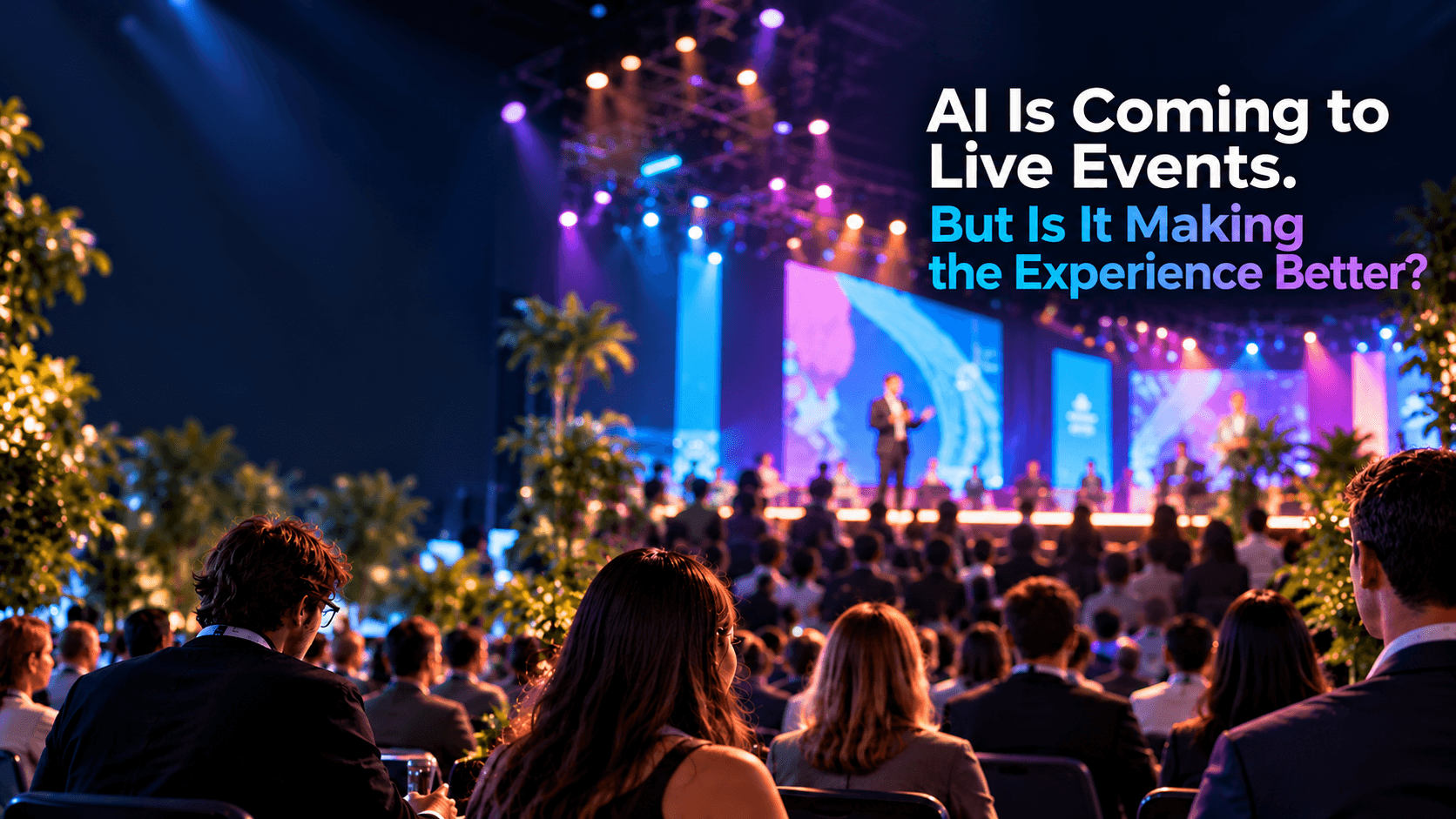
Even experienced event strategists can struggle to predict what attendees will value most. In a conversation with Dr. Paul J. Zak, event strategist Gianna Gaudini shares why intention, personalization, delight, and human connection are essential to creating memorable events, and why traditional surveys often miss what matters. The discussion explores how real-time measurement can help event organizers make better decisions and design more impactful experiences.
Paul Zak, PhD
Founder
Share
A conversation with event strategist Gianna Gaudini on designing memorable experiences—and measuring what actually works.
I recently spoke with Gianna Gaudini, author of The Art of Event Planning and a veteran event strategist who spent a decade creating experiences at Google. Our conversation kept returning to a deceptively simple idea: great events aren't defined by flawless execution. They are designed to change people. Here is my edited conversation with her.
Event designers spend months trying to predict what attendees will value. I asked Gianna if much of that effort is directed at the wrong things.
“Enjoyment and pleasure are different from delight and unforgettable,” Gianna told me.
Her approach starts with the entire attendee journey: Where is this person when they arrive, and where do you want to take them?
That transformation is what makes an experience memorable.
What Makes an Event Memorable?
Gianna designs great experience using core three elements: intention, personalization and delight.
Intention starts with knowing what the experience needs to accomplish. Personalization requires understanding that different attendees want different things. At Google Cloud Next, for example, she designed for an audience of roughly 30,000 that included developers, CEOs, partners, press, analysts and other distinct groups. Each required a different journey.
Then comes delight.
“Delight is often the first thing we eliminate,” Gianna said. “It seems fluffy, but it's not. It's sticky.”
Delight can come from storytelling, surprise, humor, awe or simply doing something differently enough to command attention. Those moments matter because attendees remember them—and talk about them afterward.
One principle she learned at Google captures the idea nicely:
Know the user. Know the magic. Connect the two.
Why Event Planners Struggle to Predict What Attendees Value
Event professionals put enormous effort into predicting what audiences will value. According to a statistic Gianna learned from "unconference" pioneer Adrian Segar, event producers correctly predict what attendees want to hear only about 40% of the time.
That number stuck with her.
If it's right, more than half the time organizers are spending months and substantial budgets creating content that isn't what the people in the room want.
Her response is to stop over-programming.
Instead of filling most of an event with predetermined content, give attendees more opportunities to participate, discuss, teach, question and connect. A concise presentation can introduce an idea, followed by discussion, workshops or Q&A.
“When people gather these days, most of the reason is because they want to talk to the people in the room,” she said. “Otherwise, they would get the content some other way.”
That's an important distinction. The value of a live experience increasingly comes from what cannot easily be replicated online: human interaction.
Using AI to Make Events More Human
That becomes particularly important as AI moves into events.
Gianna advises several companies using AI in the events industry, and she sees its enormous potential. AI can accelerate proposals, match customers with relevant experiences, personalize recommendations and eliminate hours of repetitive work.
But she draws a sharp line around human interaction.
“Do not outsource your people to AI,” she told me. “A human response is the new luxury.”
The best application of AI, in her view, is to speed up work so staff can add humanity to events. Automate the work that keeps people behind screens so they have more time for relationships, creativity and attendee interaction.
That's a useful test for every new event technology: Does it enhance the human experience, or get between people?
Why More Survey Responses Don't Mean Better Data
Gianna knows this problem unusually well. At Google, she managed surveys for large events, including Google Cloud Next.
At one point, her team increased survey response rates by an extraordinary 600%. The trick was simple: attendees had to complete the survey to receive their event T-shirt.
On paper, it looked like a spectacular measurement success.
Gianna considered it a disaster.
People wanted their shirts. Lines were long. Attendees rushed through the survey so they could collect the merchandise and leave.
“The data were complete rubbish,” she said.
The experience taught her to be skeptical of ratings collected simply because they are easy to get. She finds open-ended responses more useful because they can reveal problems organizers never anticipated.
But even good surveys have a fundamental limitation: they ask attendees after the experience to reconstruct what mattered during it.
That's very different from measuring the experience as it happens.
I asked Gianna what she would do if she could measure the value attendees obtain from an experience while it is happening.
Her answer was immediate.
She said, it would mean “eliminating a lot of guesswork.”
Her event strategy integrates four sources of information: the organization's goals, attendees' goals, the external environment, and data from previous events. Better data makes the entire strategy sharper.
Knowing exactly what resonated—and what didn't—makes the next event much easier to design.
That's precisely why we built ImmersionLive.
From Return on Experience (ROX) to Customer Lifetime Value (CLV)
ImmersionLive is software applied to arm-worn sensors that measure what attendees' brain's value continuously throughout an experience. Instead of asking people afterward what they remember liking, event designers can see second by second which speakers, content, activations and experiences produced the greatest neurologic value.
Immersion is the one-second frequency neural data stream that captures the value people get from experiences. An events that induces consistent Immersion peaks generate a high Return on Experience (ROX). Attendees love what happened, will share it with others and return next year. ROX directly increases CLV (customer lifetime value).
The objective isn't to eliminate the creativity and intuition of great event designers. Quite the opposite.
It's to give them better feedback.
Gianna described great events as the intersection of intention, personalization and delight. ImmersionLive provides a way to measure whether those intentions actually translated into value for attendees.
Did the keynote work? Did the surprise create delight? Did attendees value the programmed content or the opportunity to interact with one another? Did different audience segments respond differently? Where did value disappear?
Instead of debating these questions in the post-event meeting, ImmersionLive enables anyone to measure them. Easily and inexpensively.
And then design the next experience accordingly.
As Gianna put it:
“Data that informs what you do next means you’re smart.”
For an industry built around creating unforgettable experiences, that's a pretty good place to start.
FAQs
What makes an event memorable for attendees?
Memorable events combine intention, personalization, and delight. Rather than simply delivering content, they create meaningful moments that encourage connection, participation, and emotional engagement.
Why aren't post-event surveys enough to measure event success?
Post-event surveys rely on what attendees remember and choose to report, which may not accurately reflect their experience in the moment. Survey incentives can also influence response quality. Continuous measurement provides another way to understand which parts of an event resonated with attendees.
How can AI improve the attendee experience?
AI can help event teams streamline repetitive tasks, personalize recommendations, and improve planning efficiency. Its greatest value may come from freeing up staff to focus on creativity, meaningful interactions, and the human connections that make live events valuable.