" width="95px"><path d="M 0 0 L 95 0 L 95 19 L 0 19 Z" fill="transparent" height="19px" id="f141K9XUg" width="95px"/><path d="M 1.906 0 C 2.959 0 3.813 0.863 3.813 1.927 C 3.813 2.992 2.959 3.854 1.906 3.854 C 0.853 3.854 0 2.992 0 1.927 C 0 0.863 0.853 0 1.906 0 Z M 0.254 5.818 L 3.468 5.818 L 3.468 15.233 L 0.254 15.233 Z M 5.737 15.233 L 8.951 15.233 L 8.951 9.727 C 8.951 8.975 9.368 8.149 10.44 8.149 C 11.583 8.149 12.074 8.975 12.074 9.911 L 12.074 15.233 L 15.287 15.233 L 15.287 9.617 C 15.323 8.901 15.759 8.149 16.776 8.149 C 17.92 8.149 18.41 8.975 18.41 9.911 L 18.41 15.233 L 21.624 15.233 L 21.624 9.03 C 21.624 6.405 19.699 5.543 17.992 5.543 C 16.976 5.543 15.886 6.075 14.906 7.268 C 14.252 6.002 12.891 5.543 11.656 5.543 C 10.639 5.543 9.713 6.075 8.987 6.809 L 8.951 6.809 L 8.951 5.818 L 5.737 5.818 Z M 23.621 15.233 L 26.834 15.233 L 26.834 9.727 C 26.834 8.975 27.252 8.149 28.323 8.149 C 29.467 8.149 29.957 8.975 29.957 9.911 L 29.957 15.233 L 33.171 15.233 L 33.171 9.617 C 33.207 8.901 33.643 8.149 34.659 8.149 C 35.803 8.149 36.293 8.975 36.293 9.911 L 36.293 15.233 L 39.507 15.233 L 39.507 9.03 C 39.507 6.405 37.582 5.543 35.876 5.543 C 34.859 5.543 33.77 6.075 32.789 7.268 C 32.136 6.002 30.774 5.543 29.539 5.543 C 28.523 5.543 27.597 6.075 26.871 6.809 L 26.834 6.809 L 26.834 5.818 L 23.621 5.818 Z M 50.927 10.975 C 50.945 10.865 50.945 10.663 50.945 10.535 C 50.945 7.231 48.785 5.543 45.952 5.543 C 43.138 5.543 40.832 7.782 40.832 10.535 C 40.832 13.269 43.138 15.509 45.952 15.509 C 48.022 15.509 49.729 14.829 50.782 13.049 L 48.458 11.875 C 47.677 12.719 47.223 12.921 46.188 12.921 C 45.371 12.921 44.173 12.425 44.173 10.975 Z M 44.264 9.177 C 44.318 8.314 44.936 7.653 46.043 7.653 C 46.987 7.653 47.659 8.186 47.804 9.177 Z M 52.416 15.233 L 55.629 15.233 L 55.629 10.278 C 55.629 10.039 55.865 8.369 57.536 8.369 C 58.607 8.369 59.206 8.883 59.206 8.883 L 60.55 6.13 C 60.55 6.13 59.714 5.543 58.516 5.543 C 56.682 5.543 55.666 7.176 55.666 7.176 L 55.629 7.176 L 55.629 5.818 L 52.416 5.818 Z M 65.361 5.543 C 62.91 5.543 61.294 6.644 61.294 8.571 C 61.294 9.984 62.238 10.645 63.182 11.14 C 64.235 11.691 65.252 11.746 65.252 12.425 C 65.252 13.049 64.707 13.104 64.253 13.104 C 63.219 13.104 61.948 12.021 61.948 12.021 L 60.64 14.242 C 60.64 14.242 61.984 15.509 64.235 15.509 C 66.142 15.509 68.647 15.068 68.647 12.297 C 68.647 10.37 67.049 9.672 65.815 9.287 C 65.016 9.03 64.362 8.883 64.362 8.387 C 64.362 7.947 64.653 7.818 65.361 7.818 C 66.341 7.818 67.431 8.406 67.431 8.406 L 68.484 6.277 C 68.484 6.277 67.158 5.543 65.361 5.543 Z M 71.897 0 C 72.95 0 73.803 0.863 73.803 1.927 C 73.803 2.992 72.95 3.854 71.897 3.854 C 70.844 3.854 69.991 2.992 69.991 1.927 C 69.991 0.863 70.844 0 71.897 0 Z M 70.245 5.818 L 75.404 5.811 C 75.404 5.811 71.946 6.741 71.921 10.426 C 71.895 14.377 75.847 15.199 75.847 15.199 L 70.245 15.233 Z M 79.103 15.205 L 84.633 15.208 L 84.633 9.886 C 84.633 8.95 85.577 8.05 86.54 8.05 C 87.575 8.05 88.21 8.95 88.21 9.886 L 88.21 15.208 L 91.424 15.208 L 91.424 9.005 C 91.424 6.38 89.045 5.517 87.338 5.517 C 86.322 5.517 85.396 6.05 84.67 6.784 L 84.633 6.784 L 84.633 5.793 L 79.449 5.814 C 79.449 5.814 83.03 6.545 83.134 10.416 C 83.233 14.115 79.103 15.205 79.103 15.205 Z" fill="rgb(243, 241, 249)" height="15.508518576655096px" id="BrOY0jDQO" transform="translate(1.611 1.675)" width="91.42354276158623px"/><path d="M 1.906 0 C 2.959 0 3.813 0.863 3.813 1.927 C 3.813 2.992 2.959 3.854 1.906 3.854 C 0.853 3.854 0 2.992 0 1.927 C 0 0.863 0.853 0 1.906 0 Z" fill="rgb(70, 112, 205)" height="3.854188048636182px" id="yIBDdP8YK" transform="translate(77.207 10.186)" width="3.8127090301003363px"/></g></svg>)

AI Fatigue Is Real. Human Experiences Just Became More Valuable
As AI-generated content becomes more abundant, audiences are increasingly overwhelmed and skeptical of what they encounter online. Dr. Paul J. Zak explains why emotionally compelling, shared human experiences are becoming more valuable, and how organizations can design and measure experiences that influence memory, behavior, and loyalty.

Paul Zak, PhD
Founder
Share
Key Takeaways
As AI-generated content floods every channel, authentic human experiences become increasingly important.
The brain values experiences that are emotionally compelling.
Organizations that design and execute measurably high-ROX experiences have a lasting competitive advantage.
Microsoft reports that 75% of knowledge workers now use AI at work. That's the good news. The bad news is that employees are overwhelmed by AI-generated emails, marketers are competing against an endless stream of synthetic content, and customers are becoming increasingly skeptical of what they see online. AI is making communication cheaper than ever. Ironically, that makes genuine human experiences more valuable than ever. The plethora of AI-content and suspected AI-content produces AI fatigue.
This is not an argument against AI. AI is becoming an essential productivity tool. But as digital content becomes abundant, scarcity shifts. What becomes scarce—and therefore valuable—is an experience that another human being cannot replicate with a prompt.
The organizations that understand this shift have a competitive advantage.
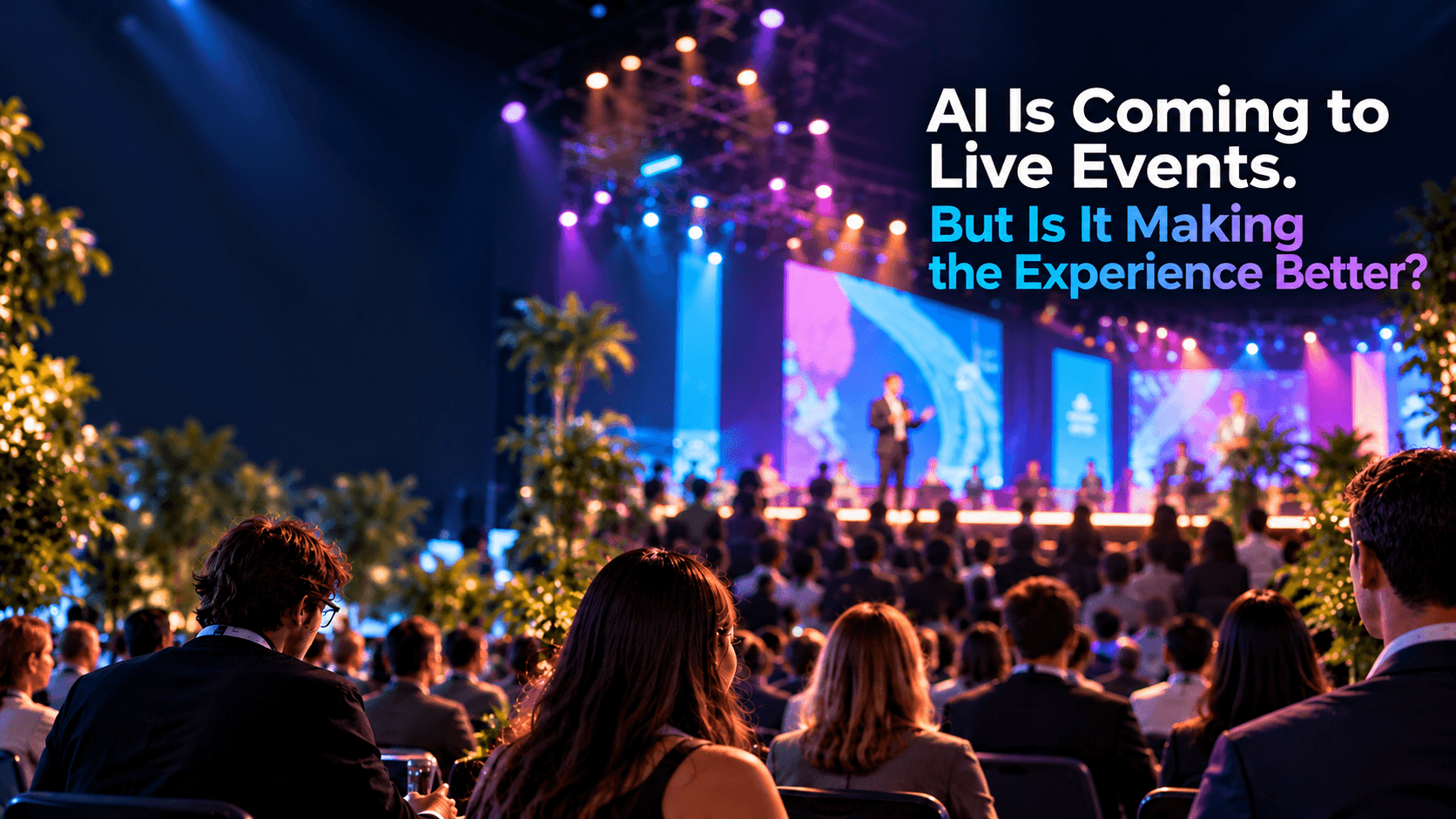
Why does AI fatigue increase the value of live experiences?
Short answer: Because the brain evolved to prioritize experiences that resonate emotionally over synthetic information.
Every day we consume thousands of pieces of digital content. Most evaporate immediately because the brain decides they are not worth the metabolic investment to fully process and remember. Attention is not enough. Memory is not automatic. The brain selectively invests its resources based on an experience's expected value.
Live experiences hijack that calculation.
When people gather together and participate in meaningful moments, the neurologic value is high and the brain encodes these experiences into long-term memory. Those memories become conversations, purchasing decisions, stronger relationships, and lasting loyalty.
As AI makes information abundant, memorable experiences become the differentiator.
Practical takeaway: Stop asking if your audience received your message. Ask whether the experience was neurologically valuable enough to influence behavior.
Why doesn't more AI-generated content solve the problem?
Short answer: More content increases noise, not value.
Many organizations have responded to AI by creating even more content—more newsletters, more videos, more social posts, more webinars.
The result is predictable.
People become overloaded.
Value plummets.
Engagement declines.
The solution is not producing more. It is creating moments that matter.
One extraordinary experience has more business impact than dozens of forgettable AI messages. The brain does not respond to volume. It measurably responds to significance. Emotionally compelling live experiences shape future behavior long after facts have been forgotten.
Practical takeaway: Design fewer experiences, but make each one social and emotionally valuable so that people continue talking about them after they leave.
How can organizations create experiences that stand out in the AI era?
Three principles consistently increase the neurological value of live experiences.
1. Prepare the audience to succeed
People cannot fully engage if they are distracted, uncomfortable, hungry, exhausted, or anxious.
Psychological readiness is not logistics.
It is performance optimization.
Psychologically safe participants devote more cognitive resources to learning, connecting, and remembering.
2. Create repeated peak moments
The brain cycles through waves of peak Immersion and Immersion troughs.
Long stretches of uninterrupted presentations tank brain resources regardless of content quality.
Instead, intentionally create repeated peak moments that surprise, involve, or inspire the audience throughout the experience. Then, give them a chance to recover. Follow peak Immersion with a light amuse-bouche.
Memories of peak Immersion moments are what people carry home and affect the actions they take the next day, the next week, and the next year.
3. Create opportunities to connect
Information alone is insufficient.
Experiences worth remembering nearly always involve other people. Design time and space for natural connections. Food is biologically relaxing so make sure to provide it. Do not rush people away after a meal, let them linger. Snacks and coffee are also an effective way to create unexpected collisions that spark new relationships and new business opportunities.
Get silly. Laughing at ourselves and others breaks down the walls between us and opens us to authentic connection. Design for fun.
How do you know whether an experience actually worked?
Short answer: Measure the brain.
Organizations routinely measure attendance, registrations, satisfaction scores, and social impressions.
None of these answers the most important question:
Did the experience create enough neurologic value to influence behavior?
That is the metric that matters. The ImmersionLive kit empowers anyone to measure every moment of an event by simply waving an arm-worn sensor over an iPad and giving it to an attendee. Immersion—the brain's social-emotional valuation network—is measured from the brain's cranial nerves, its output file. It's so easy it seems like magic, but it just took Immersion Neuroscience's founders 20 years to make it so simple. Neurologic Immersion consistently predicts individual and market behaviors with 90+% accuracy in peer-reviewed published research.
ImmersionLive even calculates the Return on Experience (ROX) using brain data. This enables event designers to identify which speakers, sessions, interactions, and environments consistently produce extraordinary audience experiences—and continuously improve them. Let's be honest, improving events every year is why clients renew contracts.
In an AI-driven world, optimization cannot stop at content. It must extend to the experience itself.
Get a demo of ImmersionLive today using this link so that attendees fall in love with the experience. Love can be measured, but only with ImmersionLive.
The Bottom Line
The AI era will not reduce the importance of human experiences. It will amplify their value.
As synthetic content becomes abundant, authentic experiences become scarce.
Organizations that learn to create—and objectively measure—extraordinary experiences will build stronger relationships, better learning, greater loyalty, and sustain a durable competitive advantage.
The future belongs to companies that use AI to improve efficiency while investing in the one thing AI cannot commoditize: extraordinary human experiences.
FAQs
What is AI fatigue?
AI fatigue is the overload and skepticism that results from constant exposure to AI-generated content, automated communication, and digital information.
Why are live experiences becoming more valuable?
Because they create powerful emotional responses and authentic human interactions that are difficult to replicate digitally and are more likely to produce lasting memories and stronger relationships.
What is Return on Experience (ROX)?
Return on Experience (ROX) measures the business value created by an experience by quantifying how effectively it generates neurologic Immersion which predicts meaningful business outcomes.
Can AI replace live experiences?
AI can improve efficiency, personalize communication, and automate many tasks. It cannot replace the biological and social mechanisms that make shared human experiences so memorable that they influence behavior.