" width="95px"><path d="M 0 0 L 95 0 L 95 19 L 0 19 Z" fill="transparent" height="19px" id="f141K9XUg" width="95px"/><path d="M 1.906 0 C 2.959 0 3.813 0.863 3.813 1.927 C 3.813 2.992 2.959 3.854 1.906 3.854 C 0.853 3.854 0 2.992 0 1.927 C 0 0.863 0.853 0 1.906 0 Z M 0.254 5.818 L 3.468 5.818 L 3.468 15.233 L 0.254 15.233 Z M 5.737 15.233 L 8.951 15.233 L 8.951 9.727 C 8.951 8.975 9.368 8.149 10.44 8.149 C 11.583 8.149 12.074 8.975 12.074 9.911 L 12.074 15.233 L 15.287 15.233 L 15.287 9.617 C 15.323 8.901 15.759 8.149 16.776 8.149 C 17.92 8.149 18.41 8.975 18.41 9.911 L 18.41 15.233 L 21.624 15.233 L 21.624 9.03 C 21.624 6.405 19.699 5.543 17.992 5.543 C 16.976 5.543 15.886 6.075 14.906 7.268 C 14.252 6.002 12.891 5.543 11.656 5.543 C 10.639 5.543 9.713 6.075 8.987 6.809 L 8.951 6.809 L 8.951 5.818 L 5.737 5.818 Z M 23.621 15.233 L 26.834 15.233 L 26.834 9.727 C 26.834 8.975 27.252 8.149 28.323 8.149 C 29.467 8.149 29.957 8.975 29.957 9.911 L 29.957 15.233 L 33.171 15.233 L 33.171 9.617 C 33.207 8.901 33.643 8.149 34.659 8.149 C 35.803 8.149 36.293 8.975 36.293 9.911 L 36.293 15.233 L 39.507 15.233 L 39.507 9.03 C 39.507 6.405 37.582 5.543 35.876 5.543 C 34.859 5.543 33.77 6.075 32.789 7.268 C 32.136 6.002 30.774 5.543 29.539 5.543 C 28.523 5.543 27.597 6.075 26.871 6.809 L 26.834 6.809 L 26.834 5.818 L 23.621 5.818 Z M 50.927 10.975 C 50.945 10.865 50.945 10.663 50.945 10.535 C 50.945 7.231 48.785 5.543 45.952 5.543 C 43.138 5.543 40.832 7.782 40.832 10.535 C 40.832 13.269 43.138 15.509 45.952 15.509 C 48.022 15.509 49.729 14.829 50.782 13.049 L 48.458 11.875 C 47.677 12.719 47.223 12.921 46.188 12.921 C 45.371 12.921 44.173 12.425 44.173 10.975 Z M 44.264 9.177 C 44.318 8.314 44.936 7.653 46.043 7.653 C 46.987 7.653 47.659 8.186 47.804 9.177 Z M 52.416 15.233 L 55.629 15.233 L 55.629 10.278 C 55.629 10.039 55.865 8.369 57.536 8.369 C 58.607 8.369 59.206 8.883 59.206 8.883 L 60.55 6.13 C 60.55 6.13 59.714 5.543 58.516 5.543 C 56.682 5.543 55.666 7.176 55.666 7.176 L 55.629 7.176 L 55.629 5.818 L 52.416 5.818 Z M 65.361 5.543 C 62.91 5.543 61.294 6.644 61.294 8.571 C 61.294 9.984 62.238 10.645 63.182 11.14 C 64.235 11.691 65.252 11.746 65.252 12.425 C 65.252 13.049 64.707 13.104 64.253 13.104 C 63.219 13.104 61.948 12.021 61.948 12.021 L 60.64 14.242 C 60.64 14.242 61.984 15.509 64.235 15.509 C 66.142 15.509 68.647 15.068 68.647 12.297 C 68.647 10.37 67.049 9.672 65.815 9.287 C 65.016 9.03 64.362 8.883 64.362 8.387 C 64.362 7.947 64.653 7.818 65.361 7.818 C 66.341 7.818 67.431 8.406 67.431 8.406 L 68.484 6.277 C 68.484 6.277 67.158 5.543 65.361 5.543 Z M 71.897 0 C 72.95 0 73.803 0.863 73.803 1.927 C 73.803 2.992 72.95 3.854 71.897 3.854 C 70.844 3.854 69.991 2.992 69.991 1.927 C 69.991 0.863 70.844 0 71.897 0 Z M 70.245 5.818 L 75.404 5.811 C 75.404 5.811 71.946 6.741 71.921 10.426 C 71.895 14.377 75.847 15.199 75.847 15.199 L 70.245 15.233 Z M 79.103 15.205 L 84.633 15.208 L 84.633 9.886 C 84.633 8.95 85.577 8.05 86.54 8.05 C 87.575 8.05 88.21 8.95 88.21 9.886 L 88.21 15.208 L 91.424 15.208 L 91.424 9.005 C 91.424 6.38 89.045 5.517 87.338 5.517 C 86.322 5.517 85.396 6.05 84.67 6.784 L 84.633 6.784 L 84.633 5.793 L 79.449 5.814 C 79.449 5.814 83.03 6.545 83.134 10.416 C 83.233 14.115 79.103 15.205 79.103 15.205 Z" fill="rgb(243, 241, 249)" height="15.508518576655096px" id="BrOY0jDQO" transform="translate(1.611 1.675)" width="91.42354276158623px"/><path d="M 1.906 0 C 2.959 0 3.813 0.863 3.813 1.927 C 3.813 2.992 2.959 3.854 1.906 3.854 C 0.853 3.854 0 2.992 0 1.927 C 0 0.863 0.853 0 1.906 0 Z" fill="rgb(70, 112, 205)" height="3.854188048636182px" id="yIBDdP8YK" transform="translate(77.207 10.186)" width="3.8127090301003363px"/></g></svg>)

Can You Trust AI
AI has a trust problem, but accuracy alone may not be enough to solve it. Research from Dr. Paul J. Zak’s lab suggests that people are more likely to trust algorithms when they see others using them, highlighting why behavior can reveal more about trust and value than surveys, ratings, or stated preferences.
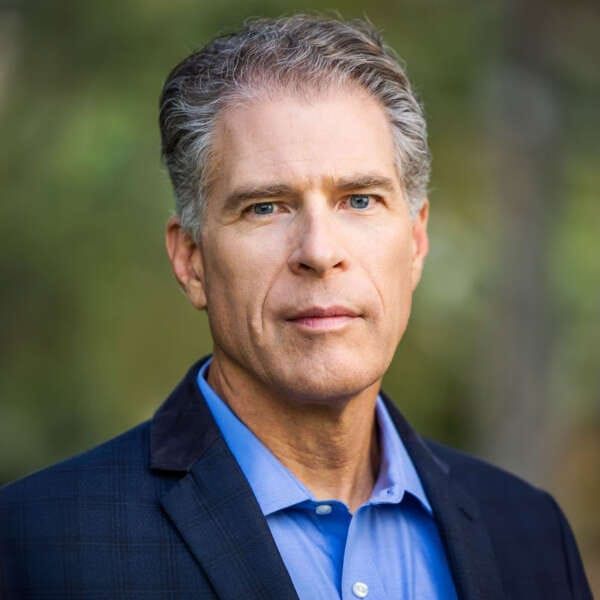
Paul Zak, PhD
Founder
Share
AI has a trust problem.
Even the people building the world's most powerful AI systems are telling the public to be cautious. Anthropic CEO Dario Amodei recently called for slowing the development of frontier AI. OpenAI CEO Sam Altman agreed that the industry needs to "pace the frontier," and SpaceXAI CEO Elon Musk backed Amodei's proposal.
The public was already skeptical. A 2026 Pew Research Center survey found that 40% of Americans expect AI to have a negative impact on society over the next 20 years, compared with only 16% who expect a positive impact. About six in ten lack confidence that U.S. companies will develop and use AI responsibly.
So what would make people trust AI?
My research reveals a surprising answer: other people using it.
The AI Trust Paradox
Years before the arrival of ChatGPT, my lab studied why people would trust algorithms. Participants completed timed mazes to earn money and could pay for assistance from an imperfect algorithm. They knew the algorithm sometimes made mistakes and were free to follow or ignore its recommendations.
The choice was important because my research showed that trust is a behavior, something that is much stronger and more actionable an answer to a survey question. Trust occurred when someone actually relied on the algorithm's advice.
We then gave subsets of participants different information about the algorithm.
Some received no information. Some were told the algorithm was 75% accurate. Others were told that a percentage of other people had used it.
Telling participants that the algorithm was 75% accurate did not significantly increase its use compared to the no-information condition. But, telling them that other people used the algorithm did. The statistical model showed that social information increased the odds of adoption 4.5-fold.
That creates a conundrum for AI.
People trust algorithms when they see other people using them. But widespread use requires people to trust them in the first place.
Don't Ask People What They Like
There was another important result in our study.
People who used the algorithm without information put less cognitive effort into monitoring it. In other words, they paid less attention to what it was doing and just relied on its recommendations. Since they did not monitor the algorithm, their performance suffered and they earned less money. By contrast, people given social information about the algorithm had a heightened neurophysiologic response showing they were monitoring the algorithm. Those who monitored it performed better.
Trust, then, is not the same thing as liking something. Nor is trust necessarily revealed by asking someone whether an algorithm is useful, safe, or trustworthy.
Behavior is the test.
This distinction matters enormously for AI.
AI companies routinely solicit explicit feedback. Thumbs up. Thumbs down. Ratings. Surveys. Did this answer help? Did the user "like" this response?
But liking is not the same as being valuable.
People say they like healthy food and eat potato chips. They say they want to exercise and stay on the couch. They say an advertisement did not influence them and then buy the product.
Behavior reveals what people value; self-reports often do not.
Watch What People Do
The path to trustworthy AI is therefore not simply convincing people that AI is accurate. My lab's published research shows that accuracy information alone is insufficient to induce trust.
AI needs to demonstrate that it understands what matters to people.
That requires shifting attention from what people say they like to what they actually value. The distinction is fundamental. A person can like an AI response without acting on it. Another response will influence behavior without receiving a thumbs-up.
The first produces an opinion. The second reveals value.
The same principle applies outside AI. Surveys and ratings capture conscious reports. Behavior reveals value.
This is why ImmersionLive was built around the objective measurement of value. This easy-to-use kit has wearables and software that continuously measure a neurophysiologic signal called Immersion, identifying second by second what the brain values during an experience.
No survey is required. No rating is required. No one has to explain why something mattered. The data are granular.
The brain continuously reveals the value of an experience.
The best way to know what is important to people is to measure what they value.
See how ImmersionLive measures value by scheduling a demo today.
FAQs
What makes people trust AI?
Research suggests that accuracy information alone may not be enough. In Dr. Paul J. Zak’s study, participants were significantly more likely to use an algorithm when they learned that other people had used it.
Why aren’t surveys enough to measure trust?
What people say they like or trust does not always predict what they will actually do. Behavioral and neurophysiologic measures can provide additional insight into whether an experience is valuable enough to influence action.
How can neuroscience help measure what people value?
Immersion continuously measures a neurophysiologic signal associated with value, allowing researchers and organizations to see how people respond to an experience moment by moment rather than relying only on feedback collected afterward.