" width="95px"><path d="M 0 0 L 95 0 L 95 19 L 0 19 Z" fill="transparent" height="19px" id="f141K9XUg" width="95px"/><path d="M 1.906 0 C 2.959 0 3.813 0.863 3.813 1.927 C 3.813 2.992 2.959 3.854 1.906 3.854 C 0.853 3.854 0 2.992 0 1.927 C 0 0.863 0.853 0 1.906 0 Z M 0.254 5.818 L 3.468 5.818 L 3.468 15.233 L 0.254 15.233 Z M 5.737 15.233 L 8.951 15.233 L 8.951 9.727 C 8.951 8.975 9.368 8.149 10.44 8.149 C 11.583 8.149 12.074 8.975 12.074 9.911 L 12.074 15.233 L 15.287 15.233 L 15.287 9.617 C 15.323 8.901 15.759 8.149 16.776 8.149 C 17.92 8.149 18.41 8.975 18.41 9.911 L 18.41 15.233 L 21.624 15.233 L 21.624 9.03 C 21.624 6.405 19.699 5.543 17.992 5.543 C 16.976 5.543 15.886 6.075 14.906 7.268 C 14.252 6.002 12.891 5.543 11.656 5.543 C 10.639 5.543 9.713 6.075 8.987 6.809 L 8.951 6.809 L 8.951 5.818 L 5.737 5.818 Z M 23.621 15.233 L 26.834 15.233 L 26.834 9.727 C 26.834 8.975 27.252 8.149 28.323 8.149 C 29.467 8.149 29.957 8.975 29.957 9.911 L 29.957 15.233 L 33.171 15.233 L 33.171 9.617 C 33.207 8.901 33.643 8.149 34.659 8.149 C 35.803 8.149 36.293 8.975 36.293 9.911 L 36.293 15.233 L 39.507 15.233 L 39.507 9.03 C 39.507 6.405 37.582 5.543 35.876 5.543 C 34.859 5.543 33.77 6.075 32.789 7.268 C 32.136 6.002 30.774 5.543 29.539 5.543 C 28.523 5.543 27.597 6.075 26.871 6.809 L 26.834 6.809 L 26.834 5.818 L 23.621 5.818 Z M 50.927 10.975 C 50.945 10.865 50.945 10.663 50.945 10.535 C 50.945 7.231 48.785 5.543 45.952 5.543 C 43.138 5.543 40.832 7.782 40.832 10.535 C 40.832 13.269 43.138 15.509 45.952 15.509 C 48.022 15.509 49.729 14.829 50.782 13.049 L 48.458 11.875 C 47.677 12.719 47.223 12.921 46.188 12.921 C 45.371 12.921 44.173 12.425 44.173 10.975 Z M 44.264 9.177 C 44.318 8.314 44.936 7.653 46.043 7.653 C 46.987 7.653 47.659 8.186 47.804 9.177 Z M 52.416 15.233 L 55.629 15.233 L 55.629 10.278 C 55.629 10.039 55.865 8.369 57.536 8.369 C 58.607 8.369 59.206 8.883 59.206 8.883 L 60.55 6.13 C 60.55 6.13 59.714 5.543 58.516 5.543 C 56.682 5.543 55.666 7.176 55.666 7.176 L 55.629 7.176 L 55.629 5.818 L 52.416 5.818 Z M 65.361 5.543 C 62.91 5.543 61.294 6.644 61.294 8.571 C 61.294 9.984 62.238 10.645 63.182 11.14 C 64.235 11.691 65.252 11.746 65.252 12.425 C 65.252 13.049 64.707 13.104 64.253 13.104 C 63.219 13.104 61.948 12.021 61.948 12.021 L 60.64 14.242 C 60.64 14.242 61.984 15.509 64.235 15.509 C 66.142 15.509 68.647 15.068 68.647 12.297 C 68.647 10.37 67.049 9.672 65.815 9.287 C 65.016 9.03 64.362 8.883 64.362 8.387 C 64.362 7.947 64.653 7.818 65.361 7.818 C 66.341 7.818 67.431 8.406 67.431 8.406 L 68.484 6.277 C 68.484 6.277 67.158 5.543 65.361 5.543 Z M 71.897 0 C 72.95 0 73.803 0.863 73.803 1.927 C 73.803 2.992 72.95 3.854 71.897 3.854 C 70.844 3.854 69.991 2.992 69.991 1.927 C 69.991 0.863 70.844 0 71.897 0 Z M 70.245 5.818 L 75.404 5.811 C 75.404 5.811 71.946 6.741 71.921 10.426 C 71.895 14.377 75.847 15.199 75.847 15.199 L 70.245 15.233 Z M 79.103 15.205 L 84.633 15.208 L 84.633 9.886 C 84.633 8.95 85.577 8.05 86.54 8.05 C 87.575 8.05 88.21 8.95 88.21 9.886 L 88.21 15.208 L 91.424 15.208 L 91.424 9.005 C 91.424 6.38 89.045 5.517 87.338 5.517 C 86.322 5.517 85.396 6.05 84.67 6.784 L 84.633 6.784 L 84.633 5.793 L 79.449 5.814 C 79.449 5.814 83.03 6.545 83.134 10.416 C 83.233 14.115 79.103 15.205 79.103 15.205 Z" fill="rgb(243, 241, 249)" height="15.508518576655096px" id="BrOY0jDQO" transform="translate(1.611 1.675)" width="91.42354276158623px"/><path d="M 1.906 0 C 2.959 0 3.813 0.863 3.813 1.927 C 3.813 2.992 2.959 3.854 1.906 3.854 C 0.853 3.854 0 2.992 0 1.927 C 0 0.863 0.853 0 1.906 0 Z" fill="rgb(70, 112, 205)" height="3.854188048636182px" id="yIBDdP8YK" transform="translate(77.207 10.186)" width="3.8127090301003363px"/></g></svg>)

The Experience Is the Ad
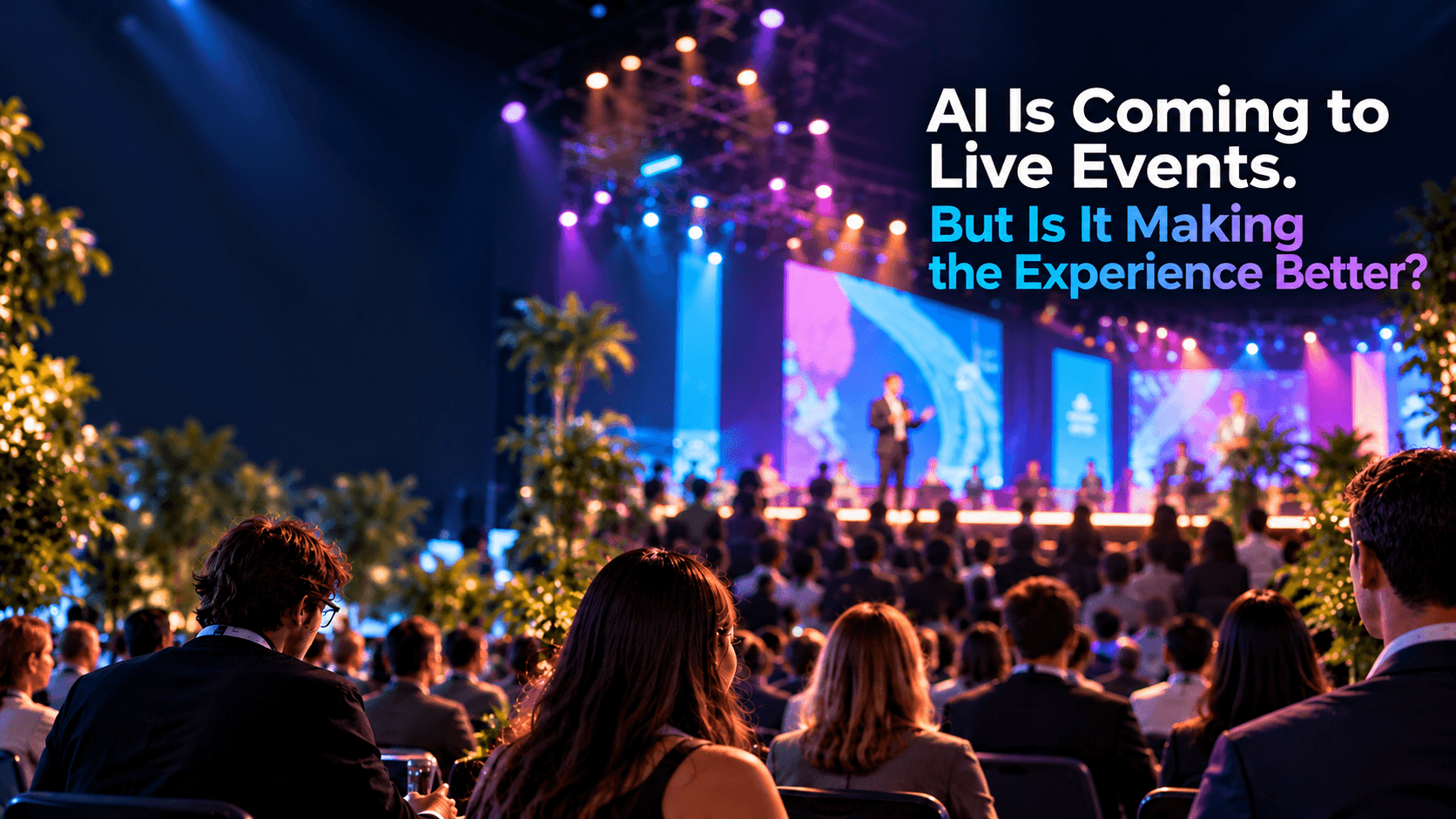
Brands are pouring money into live experiences. But creating an experience isn’t enough. It has to matter.

Paul Zak, PhD
Founder
Share
Brands are pouring money into live experiences. But creating an experience isn’t enough. It has to matter.
The best advertising no longer looks like advertising.
Look at the U.S. Open. Brands aren’t simply putting logos in front of tennis fans. They’re building experiences—hospitality spaces, interactive installations, food, entertainment and activations designed so that attendees are part of the event itself.
There’s a good reason for this shift. Digital advertising competes with an almost infinite supply of content. Consumers scroll past it, skip it, block it or simply ignore it.
A live experience is different.
You are there.
Other people are around you. The sights, sounds, movement and social interactions can create an impact that a banner ad never can.
But there’s a catch: Being there doesn’t mean your brain values the experience.
The Experience Economy Has a Measurement Problem
Brands have become remarkably good at measuring what happens around an experience.
They know how many people attended. How long they stayed. How many QR codes they scanned. They can count impressions, traffic, and clicks.
But these metrics don’t answer the most important question:
What actually mattered?
Imagine a 60-minute brand experience. Some moments are forgettable. Others capture attention for a few seconds. A handful produce an extraordinary response that becomes part of a person’s memory of the event—and of the brand itself.
Traditional event metrics like surveys treat those 60 minutes as a single experience.
The brain doesn’t.
The Brain Has to Assess Value
The brain continuously decides where to invest its scarce metabolic resources. Most of what happens around us isn’t important enough to warrant much investment.
Some experiences are.
My academic lab spent two decades studying the neurophysiology of extraordinary experiences. That research led us to identify a 1 Hz neurological signal we named Immersion which is the brain’s measure of the value of an experience.
Immersion has been continuously measured since 2017 using software we created that applies algorithms to signals captured from off-the-shelf wearables.
That changes how live experiences are evaluated and how they can be improved.
Instead of asking people afterward whether they “liked” an activation, Immersion identifies the precise moments when attendees’ brains determined that the experience mattered.
Not what people say mattered.
What their brains actually valued.
What is valued is what provokes actions, including purchases, shares, and a desire to repeat the experience.
Measure the Moments That Matter
Empowering anyone to easily measure what matters is exactly why we built ImmersionLive.
ImmersionLive is a portable self-contained kit users deploy to measure Immersion passively and continuously during any live experience. The software identifies the moments that generate peak responses and what event designers can do to create more of these.
A reveal.
A story.
A performance.
A product interaction.
A surprising human connection.
Or something the experience designer never expected.
The result is a second-by-second map showing where and when an experience created objective human value—and where it didn’t.
ImmersionLive’s trained AI agent shows designers what worked, what to remove, and who the superfans are.
That turns experiential measurement from a post-event report card into a design tool.
From Attendance to ROI
This matters now more than ever as brands increasingly invest in experiences.
Live events aren’t just competing with other events. They’re competing for marketing budgets.
CMOs and brand leaders ask the same question they ask of every other investment:
What did we get for the money?
Counting bodies isn’t enough.
Neither are surveys asking people if they enjoyed themselves.
The business value of an experience comes from changing what happens afterward: what people remember, what they tell others, whether they return and ultimately what they do.
That’s why measuring neurologic value matters. In peer-reviewed research, Immersion accurately predict post-experience purchases, information recall, and brand loyalty.
The experience is the ad.
ImmersionLive shows you whether the ad worked.
Want to know which moments your audience actually values?
See ImmersionLive in action and learn how easy it is to measure the moments that make your experiences extraordinary.
Schedule an ImmersionLive demo at getimmersion.com/live.