" width="95px"><path d="M 0 0 L 95 0 L 95 19 L 0 19 Z" fill="transparent" height="19px" id="f141K9XUg" width="95px"/><path d="M 1.906 0 C 2.959 0 3.813 0.863 3.813 1.927 C 3.813 2.992 2.959 3.854 1.906 3.854 C 0.853 3.854 0 2.992 0 1.927 C 0 0.863 0.853 0 1.906 0 Z M 0.254 5.818 L 3.468 5.818 L 3.468 15.233 L 0.254 15.233 Z M 5.737 15.233 L 8.951 15.233 L 8.951 9.727 C 8.951 8.975 9.368 8.149 10.44 8.149 C 11.583 8.149 12.074 8.975 12.074 9.911 L 12.074 15.233 L 15.287 15.233 L 15.287 9.617 C 15.323 8.901 15.759 8.149 16.776 8.149 C 17.92 8.149 18.41 8.975 18.41 9.911 L 18.41 15.233 L 21.624 15.233 L 21.624 9.03 C 21.624 6.405 19.699 5.543 17.992 5.543 C 16.976 5.543 15.886 6.075 14.906 7.268 C 14.252 6.002 12.891 5.543 11.656 5.543 C 10.639 5.543 9.713 6.075 8.987 6.809 L 8.951 6.809 L 8.951 5.818 L 5.737 5.818 Z M 23.621 15.233 L 26.834 15.233 L 26.834 9.727 C 26.834 8.975 27.252 8.149 28.323 8.149 C 29.467 8.149 29.957 8.975 29.957 9.911 L 29.957 15.233 L 33.171 15.233 L 33.171 9.617 C 33.207 8.901 33.643 8.149 34.659 8.149 C 35.803 8.149 36.293 8.975 36.293 9.911 L 36.293 15.233 L 39.507 15.233 L 39.507 9.03 C 39.507 6.405 37.582 5.543 35.876 5.543 C 34.859 5.543 33.77 6.075 32.789 7.268 C 32.136 6.002 30.774 5.543 29.539 5.543 C 28.523 5.543 27.597 6.075 26.871 6.809 L 26.834 6.809 L 26.834 5.818 L 23.621 5.818 Z M 50.927 10.975 C 50.945 10.865 50.945 10.663 50.945 10.535 C 50.945 7.231 48.785 5.543 45.952 5.543 C 43.138 5.543 40.832 7.782 40.832 10.535 C 40.832 13.269 43.138 15.509 45.952 15.509 C 48.022 15.509 49.729 14.829 50.782 13.049 L 48.458 11.875 C 47.677 12.719 47.223 12.921 46.188 12.921 C 45.371 12.921 44.173 12.425 44.173 10.975 Z M 44.264 9.177 C 44.318 8.314 44.936 7.653 46.043 7.653 C 46.987 7.653 47.659 8.186 47.804 9.177 Z M 52.416 15.233 L 55.629 15.233 L 55.629 10.278 C 55.629 10.039 55.865 8.369 57.536 8.369 C 58.607 8.369 59.206 8.883 59.206 8.883 L 60.55 6.13 C 60.55 6.13 59.714 5.543 58.516 5.543 C 56.682 5.543 55.666 7.176 55.666 7.176 L 55.629 7.176 L 55.629 5.818 L 52.416 5.818 Z M 65.361 5.543 C 62.91 5.543 61.294 6.644 61.294 8.571 C 61.294 9.984 62.238 10.645 63.182 11.14 C 64.235 11.691 65.252 11.746 65.252 12.425 C 65.252 13.049 64.707 13.104 64.253 13.104 C 63.219 13.104 61.948 12.021 61.948 12.021 L 60.64 14.242 C 60.64 14.242 61.984 15.509 64.235 15.509 C 66.142 15.509 68.647 15.068 68.647 12.297 C 68.647 10.37 67.049 9.672 65.815 9.287 C 65.016 9.03 64.362 8.883 64.362 8.387 C 64.362 7.947 64.653 7.818 65.361 7.818 C 66.341 7.818 67.431 8.406 67.431 8.406 L 68.484 6.277 C 68.484 6.277 67.158 5.543 65.361 5.543 Z M 71.897 0 C 72.95 0 73.803 0.863 73.803 1.927 C 73.803 2.992 72.95 3.854 71.897 3.854 C 70.844 3.854 69.991 2.992 69.991 1.927 C 69.991 0.863 70.844 0 71.897 0 Z M 70.245 5.818 L 75.404 5.811 C 75.404 5.811 71.946 6.741 71.921 10.426 C 71.895 14.377 75.847 15.199 75.847 15.199 L 70.245 15.233 Z M 79.103 15.205 L 84.633 15.208 L 84.633 9.886 C 84.633 8.95 85.577 8.05 86.54 8.05 C 87.575 8.05 88.21 8.95 88.21 9.886 L 88.21 15.208 L 91.424 15.208 L 91.424 9.005 C 91.424 6.38 89.045 5.517 87.338 5.517 C 86.322 5.517 85.396 6.05 84.67 6.784 L 84.633 6.784 L 84.633 5.793 L 79.449 5.814 C 79.449 5.814 83.03 6.545 83.134 10.416 C 83.233 14.115 79.103 15.205 79.103 15.205 Z" fill="rgb(243, 241, 249)" height="15.508518576655096px" id="BrOY0jDQO" transform="translate(1.611 1.675)" width="91.42354276158623px"/><path d="M 1.906 0 C 2.959 0 3.813 0.863 3.813 1.927 C 3.813 2.992 2.959 3.854 1.906 3.854 C 0.853 3.854 0 2.992 0 1.927 C 0 0.863 0.853 0 1.906 0 Z" fill="rgb(70, 112, 205)" height="3.854188048636182px" id="yIBDdP8YK" transform="translate(77.207 10.186)" width="3.8127090301003363px"/></g></svg>)
Value Measurement vs. fMRI
fMRI is the most predictive method in consumer neuroscience, and we'll say that plainly: when six methods were benchmarked against real advertising outcomes, fMRI was the only one that added predictive value over a standard survey. It is also the least usable — it requires a fixed scanner, a motionless participant, a specialist team, and weeks of analysis. You cannot run it at an event, in a store, or on a couch.
What is fMRI?
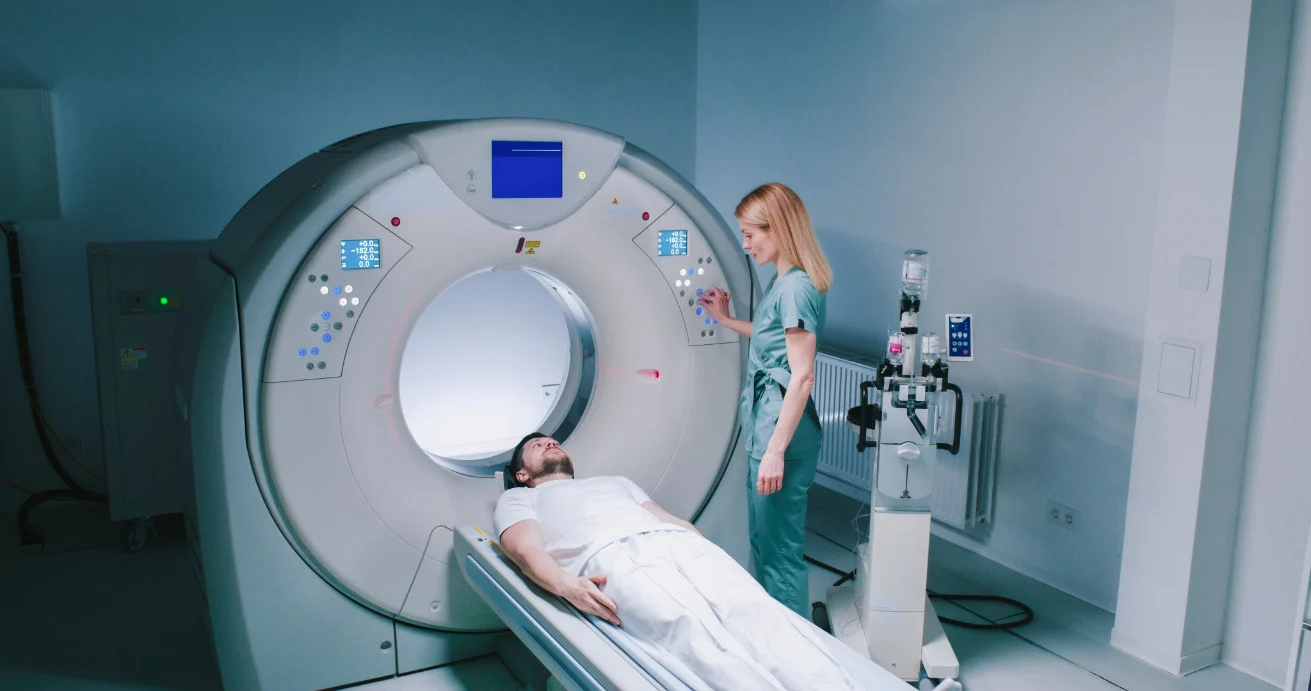
fMRI is a technique used often in neuroscience, but less popular in neuromarketing. An fMRI is a scan that uses a strong magnetic field and radio waves to create a 3D image of brain activity. To conduct an fMRI study, a participant lies on a bed that is retracted into a large metal tube where an algorithm is used to measure changes in the brain's magnetic field. fMRI is commonly used in academic research, but in neuromarketing, it's not as common as it is very costly, slow and complicated.
fMRI is an effective way to identify the locations of small changes in brain activity. However, it is thought to have poor reliability and is subject to over-interpretation because of the large amount of data collected. fMRI is not optimized to predict behavior but is focused on identifying the most active areas in the brain during a certain task.
Since MRI machines are very bulky and exceptionally expensive to maintain3, measurement can only be conducted in a laboratory setting by individuals who have been extensively trained in the technology and in working with the data. Researchers can typically only collect data from one individual at a time, and some people report feeling claustrophobic while inside the MRI tube.
As a result of these complexities, it typically takes months to execute and get insights from a project employing this methodology. Additionally, fMRI lacks in the extreme ecological validity so it is very difficult to cheaply and easily scale to wide audiences.
3 Vul, E., Harris, C., Winkielman, P., & Pashler, H. (2009). Voodoo correlations in social neuroscience. Perspectives on psychological Science, 4(3), 274-290.
What is fMRI genuinely good at?
fMRI is widely recognized in neuroscience and considered a fairly reliable measure of neural activity.
fMRI scans offer images with more detail than other diagnostic imaging techniques.
Where does fMRI fall short for measuring experiences?
fMRI requires access to costly equipment, lab time, and trained professionals to measure and interpret the data.
fMRI requires that study participants are in the lab in an enclosed metal tube, which detracts from the experience, and many individuals report feelings of claustrophobia, meaning their reactions are likely unnatural.
fMRI data takes months to process and requires professionals to interpret data to identify actionable insights, if any.
Since you can only measure one individual at a time, fMRI measurements are not easily scaled to wide audiences.
Reliability at the individual level is weak. A meta-analysis of 90 experiments (N = 1,008) found common task-fMRI measures average an intraclass correlation of .397, with the authors concluding they are "not currently suitable for brain biomarker discovery or for individual-differences research."
The same data can produce different answers. When 70 independent teams analyzed one fMRI dataset against nine pre-specified hypotheses, no two teams chose the same workflow, and on average one team in five reached a conclusion that differed from the majority.
Analytic flexibility is high. The same dataset can yield different results depending on processing choices — a problem that compounds when findings are used commercially rather than replicated.
None of this makes fMRI useless — it remains the reference method for localizing neural activity, and the field's own methodologists are the ones raising these issues. It does mean that a single fMRI study, at the sample sizes commercial work can afford, is a weaker piece of evidence than its precision suggests.
How Value Measurement is Different
Value Measurement does not require large equipment to scan the brain. It is scalable to huge audiences simultaneously and allows the capture of natural reactions in natural environments, using the smartwatches people already own.
Value Measurement measures the impact of any experience by detecting subtle heart rhythm changes that signal the brain is getting value and releasing key neurochemicals significant to future recall and action. As a result, you have insight into what connected most, and what fell short for your audience.
Dinner party fact for brain nerds
An fMRI scan uses a very large magnet to cause the electrons in brain cells to spin in the same direction. A radio frequency pulse then changes the direction of spin temporarily and the return to the axis of the magnet varies for oxygenated and de-oxygenated blood.
(Isn't science WILD?)

Is fMRI a Value Measurement?
Not in any practical sense. fMRI's predictive result is real and it's narrow. In one benchmark of 26 television ads, it was the only lab method to add predictive power beyond a standard survey. It took a scanner, ~29 participants, and months. It has never been shown to work outside one.
Value Measurement makes the opposite trade. It doesn't claim fMRI's spatial precision. It claims something fMRI structurally cannot: a reading of the same downstream neurochemical signature from a wristband, in the room, in real time, across thousands of people at once — validated in peer-reviewed work on donation behavior, purchase behavior, viewing time and mood, and independently assessed as a measurement instrument by third-party researchers.
Feels like magic, because it is good science
Using everyday wearable devices, we can infer the simultaneous release of oxytocin and dopamine throughout the day.

Join the Value Measurement Movement
What are you waiting for? Value Measurement lets you identify what people authentically care about and will act on, moment-by-moment, removing all bias from the equation. Download our Value Measurement Manifesto and join the movement today!